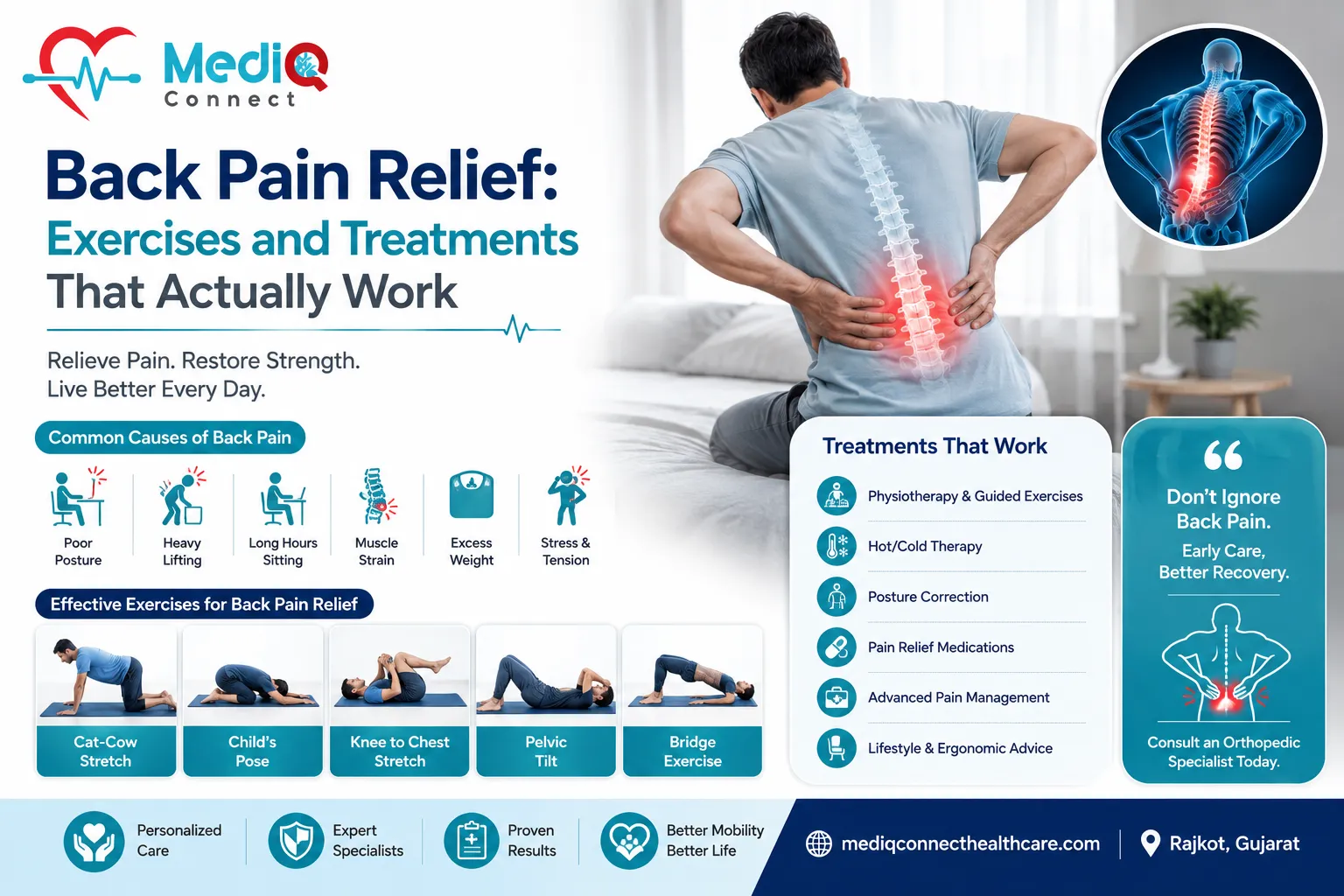



Back Pain Relief: Exercises and Treatments That Actually Work
Almost everyone experiences back pain at some point, whether from a long day at a desk, an awkward lift, or simply the gradual wear that comes with age. For most people, it is uncomfortable rather than dangerous, and it responds well to the right movement.
Finding genuinely effective back pain relief exercises can feel confusing given how much conflicting advice exists online. Some sources recommend complete rest, others push straight into strengthening, and it is not always clear which approach actually helps.
This guide walks through safe, well-established back pain relief exercises, other treatments worth knowing about, and the specific warning signs that mean it is time to see a doctor rather than continuing to self-manage at home.
Why Movement Usually Helps More Than Rest
It is tempting to stay completely still when your back hurts, but prolonged rest often makes things worse by allowing muscles to stiffen and weaken further. Most current medical guidance favours gentle, controlled movement over strict bed rest.
This is exactly why gentle movement, rather than pure rest, forms the foundation of most treatment approaches for everyday back pain. Movement keeps the surrounding muscles engaged and supports the healing process.
That said, movement needs to be the right kind and the right amount. Pushing through sharp, worsening pain is not the same as gentle, therapeutic movement, and understanding that difference matters.
A Quick Glossary: Terms Worth Knowing
- Sciatica - pain radiating along the sciatic nerve, often from the lower back down one leg
- Herniated disc - when the soft cushioning between spinal bones bulges or ruptures
- Lumbar spine - the lower section of the spine, the most common source of back pain
- Core stability - the strength and control of the muscles surrounding the trunk and spine
- Red flag symptoms - warning signs that suggest a need for prompt medical evaluation rather than home care
Understanding these terms makes it easier to follow along when a doctor explains a diagnosis, rather than feeling lost in unfamiliar terminology.
Understanding Sciatica
Sciatica occurs when the sciatic nerve, which runs from the lower back through the hips and down each leg, becomes compressed or irritated, often by a herniated disc or spinal narrowing.
Unlike general muscular back pain, sciatica typically causes pain that radiates down one leg, sometimes accompanied by numbness or tingling. Certain gentle stretches can help, but sciatica often benefits from a more tailored approach.
If you suspect sciatica specifically, mention the radiating pattern clearly to your doctor, since this changes which exercises are likely to help versus which movements might aggravate the nerve further.
Common Causes of Back Pain
Back pain rarely has a single cause, and understanding the likely source helps explain why certain back pain relief exercises work better for some people than others.
- Muscle strain from lifting, twisting, or poor posture
- Prolonged sitting and a sedentary lifestyle
- Disc issues, such as a bulging or herniated disc
- Sciatica, where a compressed nerve causes pain radiating down the leg
- Age-related degeneration of the spine
Most everyday back pain falls into the muscle strain or postural category, which generally responds well to gentle movement and targeted strengthening over time.
How Back Pain Differs Across Life Stages
Young Adults and Desk Workers
Prolonged sitting, often combined with poor posture at a desk, is one of the most common contributors to back pain in younger, working adults, even without any specific injury.
Active Adults and Athletes
Back pain in physically active people more often stems from muscle strain during lifting or sudden movements, particularly when proper form is not maintained.
Older Adults
Age-related degeneration, including disc thinning and arthritis, becomes an increasingly common cause of chronic back pain, often requiring a more gradual, carefully tailored approach to exercise.
Back Pain and Desk Work
For people who sit for long stretches at work, gentle exercise is often most effective when combined with regular movement breaks throughout the day, rather than relying on exercise alone to counteract hours of sitting.
Standing periodically, adjusting your chair and monitor height, and taking short walks during the day all reduce the cumulative strain that builds up from prolonged sitting.
If your job requires long periods at a desk, treat movement breaks as seriously as the exercises themselves, since both work together to prevent recurring discomfort.
Safe Back Pain Relief Exercises to Try
The exercises below are widely recommended for general, non-specific back pain. Move slowly, stop if you feel sharp or worsening pain, and check with a doctor before starting if you are unsure whether these are appropriate for you.
Pelvic Tilts
Lie on your back with your knees bent and feet flat on the floor. Gently tighten your abdominal muscles and flatten your lower back against the floor, hold for a few seconds, then release. This is one of the most commonly recommended back pain relief exercises for beginners.
Cat-Cow Stretch
On your hands and knees, alternate between arching your back upward while tucking your chin (cat) and letting your belly drop while lifting your head gently (cow). This gentle, rhythmic movement helps loosen a stiff spine.
Child's Pose
Kneel and sit back onto your heels, then stretch your arms forward and lower your chest toward the floor. This gentle stretch elongates the lower back and is often used as a resting position between other exercises.
Knee-to-Chest Stretch
Lying on your back, gently pull one knee toward your chest, holding for 20 to 30 seconds before switching sides. This helps stretch the lower back and glute muscles without straining the spine.
Bridges
Lying on your back with knees bent, lift your hips off the floor by engaging your glutes, hold briefly, then lower back down. This strengthens the muscles that support the lower back and pelvis.
Bird Dog
On your hands and knees, extend one arm forward and the opposite leg backward simultaneously, keeping your back flat and stable. This builds core stability, which is central to many effective home exercises for the back.
Sphinx Stretch
Lying face down, prop yourself up on your forearms, gently arching your lower back. This is a mild backbend that can help counteract the effects of prolonged sitting.
These stretches and movements are widely used because they are low-impact, require no equipment, and can typically be done safely at home once cleared by a doctor if you have any underlying concerns.
Stretching vs. Strengthening: Why You Need Both
Stretching exercises like cat-cow and child's pose primarily improve flexibility and reduce stiffness, while strengthening exercises like bridges and bird dog build the muscular support that prevents pain from recurring.
Relying only on stretching often provides short-term relief without addressing the underlying muscle weakness that contributed to the pain in the first place, which is why a balanced approach tends to work best.
A well-rounded routine typically includes both categories, gradually progressing in difficulty as your strength and comfort improve over several weeks.
Back Pain During Pregnancy
Back pain is extremely common during pregnancy, caused by a combination of weight changes, shifting posture, and hormonal changes that loosen the ligaments supporting the spine and pelvis.
Many general back pain relief exercises are not appropriate without modification during pregnancy, so it is important to consult your obstetrician or a physical therapist experienced in prenatal care before starting any new routine.
Gentle, pregnancy-safe stretches, proper posture, and supportive footwear are commonly recommended, but always confirm suitability with your doctor given your specific stage of pregnancy and any complications.
How Often Should You Do These Exercises?
Consistency generally matters more than intensity. Many people find that daily, gentle practice of a few of these back pain relief exercises produces better results than occasional, more strenuous sessions.
Start with a small number of repetitions and gradually build up as your comfort and strength improve. Rushing to increase intensity too quickly is one of the most common reasons people experience setbacks.
Pair these exercises with regular low-impact activity like walking, since general movement throughout the day supports recovery alongside targeted stretching and strengthening.
Other Treatments Worth Knowing About
Exercise is a central part of most back pain relief exercises and treatment programs, but it is often combined with other approaches for a more complete recovery.
- Ice for the first 48 to 72 hours after an acute flare-up, to reduce inflammation
- Heat for chronic stiffness or muscle tightness, to relax tissue and improve blood flow
- Over-the-counter anti-inflammatory medication, used appropriately and under guidance
- Physical therapy, for a structured, personalised exercise and recovery plan
- Massage therapy, which can provide temporary relief for muscle tension
None of these replace a proper diagnosis. They work best as part of a plan discussed with a doctor, particularly if your pain has lasted more than a few weeks.
When Exercise Is Not the Right First Step
Not all back pain should be treated with exercise right away. Certain symptoms mean you should see a doctor before starting any new movement routine, rather than working through the pain.
- Pain following a significant fall, accident, or direct injury
- Numbness, tingling, or weakness in the legs
- Loss of bladder or bowel control, which requires emergency care
- Fever alongside back pain
- Unexplained weight loss alongside persistent back pain
These red flags fall outside the scope of general home exercise and point toward something that needs a proper medical evaluation, sometimes urgently.
When to See a Doctor for Ongoing Back Pain
Beyond the emergency red flags above, several patterns suggest it is time to move past self-management and see a doctor for a proper evaluation.
- Pain persisting beyond four to six weeks despite consistent home exercises
- Pain that is worsening rather than improving over time
- Pain that radiates down one or both legs
- Pain that disrupts sleep or daily activities significantly
If home-based back pain relief exercises have not made a meaningful difference within this timeframe, continuing to self-manage without a diagnosis often delays more effective treatment.
The Connection Between Stress, Weight, and Back Pain
Chronic stress can contribute to muscle tension, including in the back, sometimes worsening pain independently of any structural issue. Managing stress through relaxation techniques can complement physical treatment.
Excess body weight also places additional strain on the spine, particularly the lower back, which can make consistent exercise more important, not less, for people managing both weight and back pain concerns together.
Addressing these broader factors alongside targeted exercise often produces more lasting results than focusing on physical treatment alone.
Real-World Scenarios: How People Manage Back Pain
Scenario 1: A Desk Worker With Gradual Onset Pain
Someone who sits most of the day develops gradual lower back stiffness. Regular movement breaks, posture adjustments, and a daily stretching routine resolve the discomfort within a few weeks.
Scenario 2: An Active Adult After a Lifting Injury
Someone strains their back lifting a heavy object. Initial rest, followed by gradual reintroduction of gentle movement, helps them recover without the pain becoming chronic.
Scenario 3: An Older Adult With Persistent Pain
An older adult experiences ongoing back pain that does not improve with home exercises after several weeks. A proper evaluation reveals age-related disc changes, leading to a tailored physical therapy program.
Each of these scenarios reflects a different pattern within the broader topic of back pain, illustrating why a personalised approach generally works better than a single generic routine.
A Quick Checklist Before Your Appointment
- Note when the pain started and whether a specific event triggered it
- Track which movements or positions make the pain better or worse
- Note any numbness, tingling, or radiating pain down the legs
- List any exercises or treatments already tried and how much they helped
- Prepare two or three specific questions you want answered
When to Consider a Second Opinion
If a recommended treatment does not seem to be helping, or a suggested procedure feels premature, seeking a second opinion from another verified specialist is a reasonable and common step.
Bring your existing imaging and test results to the second consultation so the new doctor can review your case efficiently rather than starting the diagnostic process from scratch.
Data Privacy When Discussing Your Symptoms Online
Booking a consultation or storing medical records digitally involves sharing personal health information, so it is reasonable to want clarity on how a platform handles this data.
MediQConnect outlines its approach in its published privacy policy and terms and conditions. Reviewing these briefly before your first booking is a sensible habit.
How Back Pain Is Typically Diagnosed
A doctor usually starts with a detailed history of when the pain began, what activities affect it, and any accompanying symptoms, followed by a physical examination assessing movement, strength, and reflexes.
Imaging such as an X-ray or MRI is not always necessary for straightforward muscular back pain, but may be recommended if red flag symptoms are present or if pain persists despite conservative treatment.
The exact diagnostic approach depends on your specific symptoms and history, which is why a proper evaluation matters more than trying to self-diagnose based on general information alone.
Posture and Ergonomics: Preventing Recurrence
Many people find that gentle exercise helps in the short term but keep returning to the same discomfort because underlying posture or workstation setup was never addressed.
- Set your chair and desk height so your screen is at eye level and elbows rest comfortably
- Avoid sitting for more than 45 to 60 minutes without standing and moving briefly
- Use proper lifting technique, bending at the knees rather than the waist
- Sleep with adequate lower back support, adjusting your mattress or pillow position if needed
Combining these habits with regular exercise gives you a much stronger, more lasting result than either approach used alone.
Footwear, Driving, and Everyday Habits
Unsupportive footwear can alter posture and gait in ways that indirectly contribute to back strain over time, particularly for those who spend significant time standing or walking.
Long periods of driving, especially with poor seat positioning, can also aggravate back pain. Adjusting your seat to support the natural curve of your lower back and taking breaks on longer drives can help.
Carrying heavy bags on one shoulder repeatedly can create muscular imbalance over time. Distributing weight evenly, such as with a backpack, is generally gentler on the back.
Occupational Risks for Back Pain
Jobs involving heavy lifting, prolonged standing, or repetitive bending carry a higher risk of back pain, even without a specific injury triggering it directly.
If your work involves these activities, proper lifting technique, supportive footwear, and scheduled breaks to change position can meaningfully reduce cumulative strain on the spine.
Discuss occupational factors with your doctor if you suspect they are contributing to your back pain, since workplace modifications are sometimes a meaningful part of a broader treatment plan.
Myths and Facts About Back Pain
- Myth: Bed rest is the best treatment for back pain. Fact: Gentle movement generally speeds recovery more effectively than prolonged rest.
- Myth: Back pain always means a serious spine problem. Fact: Most cases are muscular and resolve with conservative care.
- Myth: You should avoid all exercise until pain is completely gone. Fact: Appropriate, gentle exercise often helps pain resolve faster.
- Myth: Cracking or popping sounds during stretches mean damage. Fact: Occasional joint sounds without pain are usually harmless.
Comparing MediQConnect to Generic Health Directories
- Verification: MediQConnect confirms credentials and registration before listing a doctor
- Fee transparency: consultation charges are displayed upfront
- Consultation options: both in-clinic and video consultation are available where offered
- Local focus: listings are specific to Rajkot, not a generic nationwide template
This structured approach means patients researching treatment options can move from information-gathering to booking a real consultation without losing trust along the way.
Common Mistakes to Avoid
- Jumping straight into intense exercise without a gradual warm-up period
- Ignoring pain signals and pushing through sharp discomfort
- Only stretching without also strengthening supporting muscles
- Delaying evaluation for persistent pain out of hope it will simply pass
- Returning to full activity too quickly after a flare-up
Avoiding these mistakes generally leads to a faster, more complete recovery and reduces the risk of the same pain recurring later.
How MediQConnect Helps You Find the Right Specialist
If your back pain persists despite home care, finding a qualified specialist should not add stress to an already uncomfortable situation. MediQConnect lists verified orthopedic doctors across Rajkot, with clear registration details, experience, and consultation fees displayed upfront.
Our detailed guide on the best orthopedic doctors in Rajkot covers what to look for before booking, and you can choose between an in-clinic visit or a video consultation depending on your needs.
Every listed doctor goes through a verification process before appearing in search results, so when moving beyond general back pain relief exercises to a proper evaluation, you can feel confident about who you are consulting.
Gym-Based vs. Home-Based Exercise
Home-based exercise routines are accessible and require no equipment, making them a practical starting point for most people. A gym setting can offer additional equipment and guided classes for those who prefer more structure.
Neither setting is inherently better. What matters most is consistency and proper form, both of which can be achieved at home with careful attention or in a gym with professional guidance.
If you are unsure about your form on any exercise, even simple home routines, a single session with a physical therapist can help ensure you are performing movements safely and effectively.
Walking as a Complement to Targeted Exercise
Regular walking is one of the most accessible, low-impact activities for supporting overall back health, complementing more targeted stretching and strengthening exercises.
Start with a comfortable distance and pace, gradually increasing as your comfort allows. Walking on flat, even surfaces is generally gentler than uneven terrain, particularly during a recovery period.
Many people find that combining a daily walk with a few minutes of targeted stretching produces better results than either approach alone.
How MediQConnect Approaches Medical Content Accuracy
This guide, and others across the MediQConnect blog, are written to reflect general, well-established medical information intended for education and awareness, not to replace a professional diagnosis.
Content covering topics like back pain relief exercises is reviewed for accuracy against general medical consensus, and we consistently direct readers toward a qualified doctor for anything specific to their individual health.
How MediQConnect Verifies Its Orthopedic Doctors
Every orthopedic doctor listed on MediQConnect goes through a defined onboarding process before appearing in search results, confirming their degree, state medical council registration, current practice location, and specialisation.
This matters considerably when moving beyond general back pain relief exercises to a personalised treatment plan, since patients need real confidence in who they are consulting before committing to ongoing care.
Making the Platform Easy to Use for Every Patient
A verification-first platform is only genuinely useful if booking is also simple, particularly for patients dealing with pain and limited mobility. MediQConnect's search and booking flow is designed to be straightforward.
Family members can also book on behalf of an elderly parent or relative managing chronic back pain, which can reduce the friction that sometimes delays a first orthopedic visit.
Sleep Position and Mattress Considerations
Sleeping position can meaningfully affect back pain, particularly for those with lower back issues. Side sleeping with a pillow between the knees, or back sleeping with support under the knees, is commonly recommended to maintain spinal alignment.
A mattress that is too soft or too firm can also contribute to discomfort, and while personal preference plays a role, a medium-firm mattress is generally well-supported by available evidence for most people with back pain.
If pain consistently worsens overnight or first thing in the morning, discuss your sleep setup with your doctor alongside any exercises you are already practising.
What to Expect at Your First Consultation
Be prepared to describe when your pain started, what activities make it better or worse, and which back pain relief exercises you have already tried, since this helps your doctor understand what has and has not worked.
Mention any numbness, tingling, or radiating pain specifically, even if it seems minor, since these details can meaningfully affect the diagnosis and recommended treatment.
People Also Ask
What are the best exercises for back pain relief?
Pelvic tilts, cat-cow stretches, knee-to-chest stretches, bridges, and bird dog exercises are widely recommended for general, non-specific back pain.
Is it safe to exercise with back pain?
For most non-specific back pain, gentle exercise is generally safe and helpful. However, exercise should be avoided until evaluated if you have red flag symptoms like numbness, weakness, or pain following a significant injury.
How long does back pain usually take to improve?
Most acute back pain improves within a few weeks with consistent home care. If pain persists beyond four to six weeks, a medical evaluation is recommended.
Should I use ice or heat for back pain?
Ice is generally recommended in the first 48 to 72 hours after a flare-up to reduce inflammation, while heat is more useful for chronic stiffness afterward.
When should I see a doctor for back pain?
See a doctor if pain persists beyond four to six weeks, worsens over time, radiates down the leg, or is accompanied by numbness, weakness, fever, or unexplained weight loss.
Can poor posture cause back pain?
Yes. Prolonged poor posture, especially during long periods of sitting, is a common contributor to back pain and can undermine the benefits of exercise if not also addressed.
Is walking good for back pain?
Yes, generally. Walking is a low-impact activity that supports overall back health and complements more targeted stretching and strengthening exercises well.
Can back pain be caused by stress?
Yes. Chronic stress can contribute to muscle tension, including in the back, sometimes worsening pain independently of any structural issue.
What sleeping position is best for back pain?
Side sleeping with a pillow between the knees, or back sleeping with support under the knees, is commonly recommended to maintain spinal alignment and reduce discomfort.
Should I see an orthopedic doctor or a physical therapist first?
For persistent or unclear pain, starting with an orthopedic doctor for a proper diagnosis is generally recommended, who can then refer you to physical therapy if appropriate.
Tracking Your Progress Over Time
Keeping a simple log of your pain levels, which exercises you performed, and how you felt afterward can help you and your doctor identify what is genuinely working versus what only feels helpful in the moment.
This kind of tracking is especially useful for chronic or recurring back pain, where progress often happens gradually and can be easy to underestimate without a written record to look back on and compare against how things felt weeks earlier.
Even a basic weekly note, rating your pain and listing which exercises you completed, provides valuable context for follow-up conversations with your doctor or physical therapist.
When to Revisit Your Treatment Plan
If your back pain relief exercises stop feeling effective after a period of improvement, or a new symptom appears, it is worth revisiting your doctor rather than assuming the original plan should still apply indefinitely.
Bodies change over time, and a treatment plan that worked well initially may need adjustment as your strength improves or your circumstances change, such as a new job with different physical demands.
A Note on Recurring Flare-Ups
Even with a well-managed routine, occasional flare-ups can still happen, particularly after unusual physical exertion or a period of reduced activity. This does not mean your treatment plan has failed.
Returning to your established back pain relief exercises during a flare-up, rather than abandoning them out of frustration, is generally the most effective way to get back on track quickly.
Nutrition and Spine Health
While diet is not a direct treatment for back pain, general nutritional habits that support bone and muscle health, including adequate calcium and vitamin D, contribute to long-term spine health as part of a broader lifestyle approach.
Chronic inflammation, influenced partly by diet, may also play a role in some types of persistent back pain, though this connection is complex and should be discussed with a doctor rather than addressed through diet alone.
A Note on Patience and Consistency
Meaningful improvement rarely happens overnight, even with the right approach. Give any new exercise routine a few weeks of consistent effort before judging whether it is genuinely helping.
Small, sustainable habits practised regularly tend to outperform occasional, intense effort. This applies just as much to back care as it does to most other areas of long-term health.
Supporting a Family Member With Back Pain
If a parent or family member is dealing with ongoing back pain, encouraging them to see a doctor rather than dismissing it as a normal part of aging can make a genuine difference to their quality of life.
Offering practical help, such as accompanying them to an appointment or helping research verified specialists, often removes the biggest barrier: simply getting started with a proper evaluation.
Long-Term Monitoring for Chronic Back Pain
For conditions that develop gradually and persist long-term, ongoing monitoring through periodic check-ups helps track how the spine is changing over time and whether treatment adjustments are needed.
This is particularly relevant as symptoms can shift gradually, making it easy to underestimate how much a condition has progressed without a doctor's objective assessment at regular intervals.
Bringing It All Together
Effective relief from back pain rarely comes from a single exercise or treatment alone. It usually combines consistent movement, attention to posture and daily habits, and knowing when to bring in professional support.
Start with the safe exercises covered in this guide, pay attention to how your body responds, and do not hesitate to seek a proper evaluation if pain persists or worsens despite consistent effort.
Breathing and Relaxation Techniques
Deep, controlled breathing can help relax tense back muscles, particularly when combined with gentle stretching. Tension often accumulates unconsciously, and conscious relaxation can complement physical exercise.
Some people find that pairing breathing exercises with stretches like child's pose enhances the overall relief, since slow, controlled breathing helps the nervous system shift out of a tense, guarded state.
Choosing Between Multiple Verified Doctors
It is common to find more than one verified orthopedic doctor with similar experience. In these cases, small details can help you decide - consulting language, sub-specialisation in spine care, or simply which time slots line up with your schedule.
There is no single "correct" choice in these situations. What matters is that every option in front of you has already cleared the same verification bar, so the decision comes down to genuine preference rather than guessing which listing can actually be trusted.
Final Thoughts
Most everyday back pain responds well to a combination of gentle movement, consistent back pain relief exercises, and attention to posture, rather than complete rest. Understanding when self-care is enough and when it is time to see a doctor makes all the difference.
If your back pain has persisted or worsened despite home exercises, consider booking a consultation with a verified orthopedic doctor in Rajkot through MediQConnect for a proper diagnosis and treatment plan.
Note: This article is written for general education and awareness. It is not a substitute for medical diagnosis or treatment. Talk to a doctor before starting any new exercise routine, especially if your pain is severe, recent, or accompanied by other symptoms.