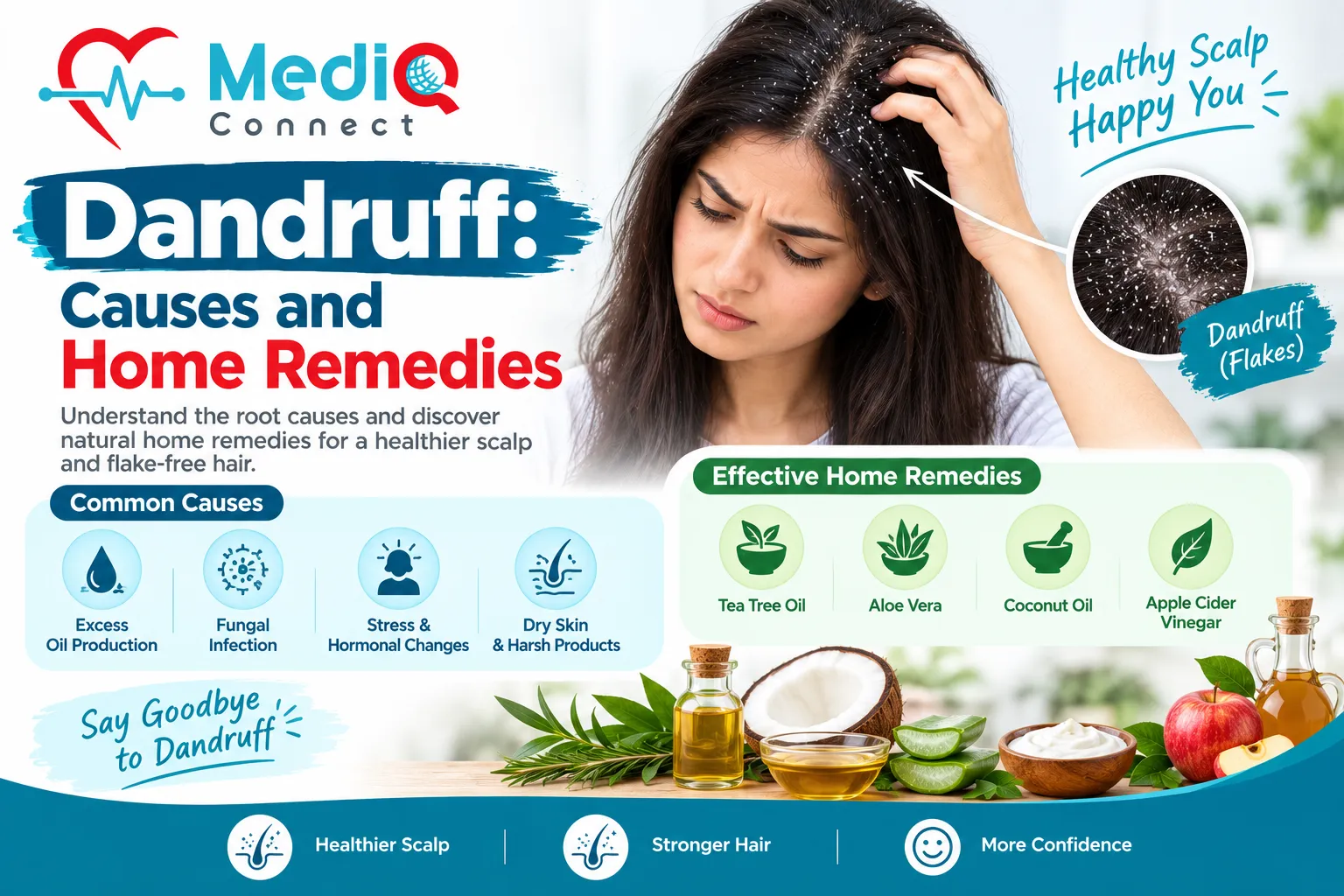



Dandruff: Causes and Home Remedies That Work
Note: This article is written for general education and awareness. It is not a substitute for medical diagnosis or treatment. If dandruff persists despite home care, please consult a qualified dermatologist for advice specific to your situation.
Nearly half of all adults experience dandruff at some point, making it one of the most common scalp concerns people search for online, right alongside general hair fall and dryness. Yet despite how common it is, a lot of the advice floating around is either overly complicated or simply not backed by good evidence.
Genuinely effective natural remedies exist, but knowing which ones actually work, and how to use them correctly, makes a meaningful difference. Some popular suggestions can even irritate the scalp further if used incorrectly, which is exactly why understanding the reasoning behind each remedy matters as much as the remedy itself.
This guide walks through what actually causes dandruff, the remedies with real evidence behind them, how to use each one safely, and when it is time to stop self-treating and see a dermatologist instead, so you can approach this common frustration with a genuine plan rather than guesswork.
What Causes Dandruff?
Dandruff happens when dead skin cells on the scalp shed faster than normal, often alongside excess oil production, resulting in the visible white or yellowish flakes most people recognise.
- Malassezia - a yeast-like fungus naturally present on everyone's scalp that can overgrow and trigger flaking
- Dry skin - particularly common during colder, drier months
- Oily, irritated skin (seborrheic dermatitis) - causing greasier, more inflamed flaking
- Contact dermatitis - a reaction to certain hair products or ingredients
- Infrequent shampooing - allowing oil and dead skin cells to build up on the scalp
Understanding which of these applies to you is genuinely useful, since the most effective remedies often depend on the underlying cause rather than being universally interchangeable.
A Quick Glossary: Terms Worth Knowing
- Malassezia - the fungus most commonly linked to dandruff and seborrheic dermatitis
- Seborrheic dermatitis - a more inflamed, often greasier form of dandruff affecting oil-rich areas of skin
- Ketoconazole - an antifungal ingredient found in many medicated dandruff shampoos
- Zinc pyrithione - an antimicrobial ingredient commonly used in over-the-counter dandruff shampoos
- Patch test - applying a small amount of a new product to a small area of skin first, to check for a reaction before wider use
Understanding these terms makes it easier to read shampoo labels and understand what a dermatologist means if they recommend a specific ingredient for your particular scalp condition.
Dandruff Home Remedies With Real Evidence Behind Them
The remedies below have some genuine research support, though results vary between individuals, and consistency matters more than any single miracle application.
Tea Tree Oil
Tea tree oil has documented antifungal properties, and one clinical study found that a shampoo containing 5 percent tea tree oil reduced dandruff severity by about 41 percent over four weeks, compared to an 11 percent improvement with a placebo.
Never apply tea tree oil undiluted directly to the scalp, since it is potent enough to cause irritation or burning. Mix a few drops with a carrier oil like coconut or olive oil, or choose a shampoo already formulated with it.
Coconut Oil
Coconut oil has antimicrobial properties and can meaningfully improve scalp hydration, making it particularly useful for dry-scalp-related flaking rather than the oilier, fungal-driven type.
Massage one to two tablespoons into the scalp, leave it on for about 30 minutes to two hours, then wash thoroughly with shampoo. Repeat this two times a week for the best results.
Apple Cider Vinegar
Apple cider vinegar's acidity may help rebalance scalp pH and reduce fungal growth, which is why it is often described as one of the more well-rounded natural options, addressing both dryness and fungal overgrowth.
Mix equal parts water and apple cider vinegar, apply after shampooing, leave on for about five minutes, then rinse thoroughly. Avoid overuse, since excessive acidity can irritate a sensitive scalp.
Aloe Vera
Aloe vera gel soothes inflammation and itching, and contains natural enzymes that gently help exfoliate dead skin cells, making it particularly suited to red, irritated, or seborrheic-dermatitis-related dandruff.
Apply fresh aloe vera gel directly to the scalp, leave it on for 20 to 30 minutes, then wash it out. This can be used up to three times a week without much risk of irritation for most people.
Neem
Neem has notable antifungal and antibacterial properties and is a particularly well-known remedy in India, often recommended specifically for fungal, yellowish-flake dandruff rather than dry-scalp flaking.
Grind fresh neem leaves into a paste with a small amount of water, apply to the scalp, leave for about 20 minutes, then rinse thoroughly. Once a week is generally sufficient.
Across all of these dandruff home remedies, consistency over several weeks matters more than intensity. Most people notice a visible reduction in flaking within two to four weeks of regular use.
How to Choose the Right Remedy for Your Type of Dandruff
Not every scalp responds the same way to the same treatment, which is why matching the remedy to your specific pattern of flaking tends to produce better results than picking randomly.
- Dry, flaky scalp - coconut oil and aloe vera gel tend to work best
- Yellowish, greasy flakes - neem and tea tree oil address the fungal component more directly
- General, mild dandruff - apple cider vinegar offers a reasonable all-around option
- Red, irritated, or inflamed scalp - aloe vera is generally the gentlest starting point
If you are unsure which category best describes your dandruff, starting with a gentler option like aloe vera or coconut oil is a reasonable, low-risk first step among common dandruff home remedies.
A Note on Essential Oils and Patch Testing
Before applying any essential oil, including tea tree oil, to your scalp for the first time, do a patch test on a small area of skin, such as the inner forearm, and wait 24 hours to check for any reaction.
Essential oils are not regulated for purity or concentration in the same way medications are, so product quality can vary considerably between brands, which is worth keeping in mind when choosing where to buy them.
If you notice redness, burning, or increased irritation after trying any dandruff home remedies, stop use immediately and rinse thoroughly, rather than pushing through in hopes of faster results.
Over-the-Counter Options Worth Knowing About
Beyond natural remedies, several over-the-counter shampoo ingredients have strong evidence behind them and are worth considering, particularly for more persistent cases.
- Ketoconazole shampoo - a broad antifungal option effective against Malassezia
- Zinc pyrithione shampoo - has both antibacterial and antifungal properties
- Salicylic acid shampoo - helps exfoliate the scalp and remove buildup
- Coal tar shampoo - slows excessive skin cell turnover, though it has a strong smell and can stain light hair
These are widely available without a prescription and can be used alongside or instead of home remedies, particularly if natural options alone are not providing enough relief.
Lifestyle and Dietary Factors Worth Considering
Stress is commonly linked to dandruff flare-ups, since it can affect oil production and immune function in ways that indirectly worsen scalp conditions.
A generally balanced diet, including adequate zinc and B vitamins, is often mentioned alongside natural remedies, though diet alone is unlikely to resolve dandruff caused primarily by fungal overgrowth or genuine skin conditions.
Regular shampooing, appropriate to your hair and scalp type, also plays a meaningful preventive role, since infrequent washing allows oil and dead skin cells to accumulate.
Dandruff During Pregnancy and Postpartum
Hormonal shifts during pregnancy and the postpartum period can sometimes trigger or worsen dandruff, even in people who did not previously experience much scalp flaking.
Most natural dandruff home remedies like coconut oil and aloe vera are generally considered safe during pregnancy, though it is worth confirming with your doctor before using essential oils like tea tree oil during this time.
Medicated shampoos containing certain active ingredients may warrant a conversation with your doctor before use during pregnancy or while breastfeeding, so check product labels and ask if you are unsure.
Telling Dandruff Apart From a Simply Oily Scalp
An oily scalp without visible flaking is not the same as dandruff, though the two can occur together and are sometimes confused with one another.
If your scalp feels greasy but you do not see visible white or yellowish flakes, more frequent washing with a gentle clarifying shampoo may be all that is needed, rather than antifungal remedies aimed at flaking specifically.
The Role of Scalp Exfoliation
Gentle scalp exfoliation, using a soft brush or a scrub formulated for the scalp, can help remove buildup and dead skin cells, complementing other remedies rather than replacing them.
Avoid aggressive scrubbing, which can cause micro-tears in the scalp and worsen irritation. Once a week is generally sufficient for most people, adjusted based on how your scalp responds.
Common Mistakes That Make Dandruff Worse
- Over-washing with harsh shampoos, which can strip the scalp and trigger more oil production
- Using undiluted essential oils directly on the skin
- Overusing acidic remedies like apple cider vinegar, leading to irritation
- Switching remedies every few days without giving any one approach enough time to work
- Scratching the scalp vigorously, which can cause micro-injuries and worsen inflammation
Avoiding these mistakes generally makes whichever remedies you choose meaningfully more effective over time.
How Long Should You Try Home Remedies Before Seeing a Doctor?
Most dandruff home remedies need consistent use for two to four weeks before you can fairly judge whether they are working. Expecting overnight results often leads to unnecessarily switching approaches too soon.
If there is no meaningful improvement after three to four weeks of consistent use, or if symptoms are worsening despite trying appropriate remedies, it is a reasonable point to seek professional evaluation.
Real-World Scenarios: Matching Remedies to Real Situations
Scenario 1: Dry Winter Flaking
Someone notices dandruff worsening every winter, alongside generally dry skin elsewhere. Coconut oil applied twice weekly, combined with a milder shampoo, resolves most of the flaking within a few weeks.
Scenario 2: Persistent Yellowish, Greasy Flakes
Someone with consistently oily, yellowish flaking tries diluted tea tree oil and neem, seeing gradual improvement over a month, consistent with a fungal-driven cause responding to antifungal remedies.
Scenario 3: Dandruff That Does Not Respond to Anything
Someone tries multiple dandruff home remedies over two months with no improvement, and a dermatologist visit reveals early seborrheic dermatitis requiring a prescription-strength approach alongside ongoing maintenance care.
Each of these scenarios illustrates why matching your approach to your specific pattern of symptoms, and knowing when to escalate to professional care, produces better outcomes than a one-size-fits-all approach.
Data Privacy When Researching Scalp Concerns Online
Booking a consultation or storing medical records digitally involves sharing personal health information, so it is reasonable to want clarity on how a platform handles this data.
MediQConnect outlines its approach in its published privacy policy and terms and conditions. Reviewing these briefly before your first booking is a sensible habit.
Comparing MediQConnect to Generic Health Directories
- Verification: MediQConnect confirms credentials and registration before listing a dermatologist
- Fee transparency: consultation charges are displayed upfront
- Consultation options: both in-clinic and video consultation are available where offered
- Local focus: listings are specific to Rajkot, not a generic nationwide template
This structured approach means patients researching dandruff home remedies and treatment escalation options can move from information-gathering to booking a real consultation without losing trust along the way.
How MediQConnect Approaches Medical Content Accuracy
This guide, and others across the MediQConnect blog, are written to reflect general, well-established dermatological information intended for education and awareness, not to replace a professional diagnosis.
Content covering topics like dandruff home remedies is reviewed for accuracy against general medical consensus, and we consistently direct readers toward a qualified dermatologist for anything specific to their individual scalp condition.
When to Consider a Second Opinion
If a prescribed treatment does not seem to be helping after a reasonable trial, or a diagnosis does not quite match your symptoms, seeking a second opinion from another verified dermatologist is entirely reasonable.
Bring a record of what you have already tried, including specific remedies and any prescribed treatments, so the new doctor can build on what has already been attempted.
Dandruff and Different Hair Types
Curly and coarser hair types are often washed less frequently to preserve natural oils, which can sometimes allow more buildup on the scalp, making certain remedies, like diluted apple cider vinegar rinses, particularly useful for gently clarifying without over-washing.
Fine, straight hair tends to show flaking more visibly, which can make dandruff feel more noticeable even at a similar underlying severity compared to thicker or curlier hair types.
Adjusting remedy application and rinse-out techniques based on your specific hair type and texture can improve both effectiveness and how manageable a remedy feels to maintain consistently.
Do Men and Women Experience Dandruff Differently?
Dandruff affects both men and women at similar rates, though hormonal factors, particularly androgens, may contribute to slightly higher oil production and dandruff prevalence in men on average.
Hair length and styling habits can also affect how dandruff is managed practically, though the underlying causes and effective remedies remain largely the same regardless of gender.
How Dandruff Differs in Children
Cradle cap, a form of seborrheic dermatitis common in infants, causes similar flaking and is generally harmless, often resolving on its own within the first year without needing aggressive treatment.
For older children with persistent scalp flaking, a pediatrician or dermatologist can help distinguish between typical dandruff and other causes, such as fungal scalp infections, which are more common in this age group than in adults.
Most standard dandruff home remedies designed for adult scalps are not appropriate for infants without specific pediatric guidance, so always check with a doctor before applying any remedy to a young child's scalp.
When Dandruff Might Actually Be Something Else
Not everything that looks like dandruff actually is. Certain conditions can closely resemble it while requiring a genuinely different treatment approach.
- Psoriasis - causes thicker, more defined, silvery-scaled patches
- Eczema - can cause similar flaking alongside more pronounced redness and itching
- Fungal scalp infections (tinea capitis) - more common in children, sometimes causing hair loss in patches
- Allergic contact dermatitis - a reaction to a specific hair product, appearing suddenly after a new product is introduced
If your flaking looks unusual, comes with hair loss, or does not respond to standard dandruff home remedies at all, a dermatologist can rule out these other possibilities.
When to See a Dermatologist
- Dandruff persists despite three to four weeks of consistent home treatment
- Significant redness, swelling, or pain accompanies the flaking
- You notice hair loss alongside the scalp symptoms
- Thick, crusty, or unusually textured patches develop
- Symptoms spread beyond the scalp to the face, ears, or chest
These signs suggest something beyond typical dandruff that genuinely benefits from a professional diagnosis rather than continued trial and error with home remedies.
Hair Brushing and Scalp Circulation
Regular, gentle brushing helps distribute natural oils along the hair shaft and can support scalp circulation, complementing other approaches to managing dandruff without being a treatment on its own.
Avoid sharing brushes or combs, particularly if dandruff is linked to a fungal cause, since this can theoretically contribute to spreading fungal organisms between household members, though this is a minor consideration compared to other hygiene factors.
Natural Remedies vs. Medicated Shampoos: Making the Choice
Neither approach is universally superior. Natural dandruff home remedies tend to be gentler and more accessible, while medicated shampoos often work faster for moderate to severe cases with a stronger fungal or inflammatory component.
Many people find success combining both, using a medicated shampoo a couple of times a week alongside gentler natural treatments on other days, rather than treating the two approaches as mutually exclusive.
If cost or product availability is a concern, natural remedies using ingredients already found in most kitchens, like coconut oil, offer a genuinely accessible starting point before considering specialised shampoos.
Choosing Between Multiple Verified Dermatologists
It is common to find more than one verified dermatologist with relevant experience treating scalp conditions. In these cases, small details can help you decide - consulting language, clinic location, or simply which time slots line up with your schedule.
There is no single "correct" choice in these situations. What matters is that every option in front of you has already cleared the same verification bar, so the decision comes down to genuine preference rather than guessing which listing can actually be trusted.
How Dandruff Is Diagnosed
A dermatologist typically diagnoses dandruff through a visual examination of the scalp, asking about your symptom history, product use, and any accompanying symptoms like itching or redness.
In cases where the diagnosis is unclear, or another condition like psoriasis or a fungal infection is suspected, a small skin scraping or biopsy may occasionally be used to confirm the underlying cause.
General Treatment Approaches Beyond Home Care
For dandruff that does not respond to over-the-counter shampoos or natural dandruff home remedies, a dermatologist may prescribe a stronger medicated shampoo, topical corticosteroid, or antifungal treatment.
For cases linked to seborrheic dermatitis specifically, treatment often needs to be ongoing rather than a one-time fix, since the underlying tendency toward inflammation typically persists even after symptoms improve.
None of these treatments should be self-prescribed based on assumptions about your specific condition. A dermatologist will confirm the actual cause before recommending a targeted approach.
Dandruff in Different Seasons
Many people notice their dandruff worsens in winter, when indoor heating and cold outdoor air both contribute to drier scalp skin, making dry-scalp-focused dandruff home remedies particularly useful during colder months.
In hot, humid climates, oilier, fungal-driven dandruff tends to be more common, since Malassezia thrives in warm, oily conditions, making antifungal remedies like tea tree oil or neem more relevant.
Adjusting your approach seasonally, rather than sticking to one remedy year-round, often produces more consistent results.
Dandruff and Hair Products
Certain hair styling products, particularly those containing alcohol or strong fragrances, can dry out or irritate the scalp, potentially worsening dandruff regardless of which home remedies you are also using.
If you have recently introduced a new shampoo, conditioner, or styling product around the time your dandruff started or worsened, consider whether contact dermatitis from that specific product might be a contributing factor.
How MediQConnect Helps You Find the Right Dermatologist
If dandruff home remedies have not resolved your symptoms after a reasonable trial period, finding a qualified dermatologist should not add stress to an already frustrating situation.
MediQConnect lists verified dermatologists across Rajkot, with clear registration details, experience, and consultation fees displayed upfront. Our detailed guide on the best dermatologist in Rajkot covers what to look for before booking.
Every listed doctor goes through a verification process before appearing in search results, so when moving beyond home care to a professional evaluation, you can feel confident about who you are consulting.
What to Expect at Your Dermatology Consultation
Be prepared to describe when your dandruff started, which dandruff home remedies or products you have already tried, and any accompanying symptoms like itching, redness, or hair loss.
Mention your typical hair washing frequency and any recent changes in hair products, since these details help your dermatologist narrow down the likely cause more efficiently.
A Final Word on Consistency
Whichever approach you choose, giving it a genuine, fair trial matters more than any single ingredient or product used alone. Scalp conditions respond gradually, and jumping between remedies every few days rarely gives any single one enough time to actually help.
Building a Realistic Routine You Can Stick To
The most effective remedy is ultimately the one you can maintain consistently, since even a genuinely good treatment fails to help if it is too complicated or time-consuming to keep up with regularly.
Choose an approach that realistically fits your schedule and preferences, whether that means a quick weekly oil treatment or a simple twice-weekly medicated shampoo swap, rather than an elaborate routine you are unlikely to follow through on.
A Note on Hair Loss Concerns Alongside Dandruff
Some hair shedding while dealing with dandruff is normal, since scratching and general scalp irritation can temporarily increase hair fall without indicating permanent hair loss.
If shedding feels significantly beyond normal, or you notice thinning patches rather than general increased shedding, this is worth a dermatologist evaluation to rule out other underlying causes.
Long-Term Maintenance Once Symptoms Improve
Once dandruff is under control, many people benefit from continuing a lighter maintenance routine, whether an occasional medicated shampoo or periodic natural treatment, rather than stopping entirely and risking symptoms returning.
This is particularly true for fungal or seborrheic-dermatitis-related dandruff, which tends to be a manageable, recurring condition rather than something with a permanent one-time fix.
The Confidence Impact of Visible Flaking
Visible dandruff, particularly on dark clothing, can affect confidence and social comfort, which is a legitimate reason to address it even though it is rarely a dangerous medical condition.
Taking this concern seriously, rather than dismissing it as purely cosmetic, is part of why finding an approach that genuinely works, whether home remedies or professional treatment, matters beyond the physical symptoms alone.
Scalp Massage: A Simple Complementary Practice
Gentle scalp massage, whether during oil application or on its own, may support circulation and help distribute natural oils more evenly, complementing other dandruff home remedies without being a standalone cure.
A few minutes of gentle massage before shampooing is a simple, low-risk addition to most routines, and many people find it genuinely relaxing alongside any practical benefit.
Making the Platform Easy to Use for Every Patient
A verification-first platform is only genuinely useful if booking is also simple, particularly for patients who have already spent weeks trying to manage a frustrating scalp condition on their own. MediQConnect's search and booking flow is designed to be straightforward.
Family members can also book on behalf of a relative dealing with a persistent scalp condition, which reduces friction for households coordinating care.
Tracking Your Progress Over Time
Keeping a simple note of which remedy you tried, when you started, and how your scalp responded helps you objectively evaluate what is actually working, rather than relying on memory alone weeks later.
This kind of tracking is particularly useful if you end up seeing a dermatologist, since a clear record of what you have already tried helps them build on your existing efforts rather than starting from scratch.
Reading Shampoo Ingredient Labels
Learning to recognise a few key ingredients on shampoo labels, such as ketoconazole, zinc pyrithione, salicylic acid, or selenium sulfide, helps you make more informed choices when browsing over-the-counter options.
Products combining a mild cleanser with one of these active ingredients are generally preferable to those relying heavily on fragrance or marketing claims without a clearly listed active ingredient.
Bringing It All Together
Most dandruff responds well to consistent, correctly matched care, whether that means natural remedies, over-the-counter shampoos, or a combination of both, given enough time to actually work.
Pay attention to how your specific scalp responds, adjust your approach if something is not working after a fair trial, and do not hesitate to seek professional evaluation if home care genuinely is not enough.
A Quick Checklist Before Trying a New Remedy
- Patch test any new essential oil or product before wider use
- Dilute potent oils like tea tree oil properly before applying to the scalp
- Give any remedy at least two to three weeks before judging effectiveness
- Stop immediately if you notice irritation, burning, or worsening symptoms
Following this checklist helps you try dandruff home remedies safely, rather than risking unnecessary scalp irritation along the way.
Myths and Facts About Dandruff
- Myth: Dandruff is caused by poor hygiene alone. Fact: While infrequent washing can contribute, dandruff often stems from fungal overgrowth or skin conditions unrelated to cleanliness.
- Myth: Dandruff is contagious. Fact: Dandruff itself is not contagious, since the fungus involved is naturally present on most people's scalps already.
- Myth: Natural remedies always work faster than medicated shampoos. Fact: Both approaches generally require several weeks of consistent use to show results.
- Myth: Dandruff means your hair is unhealthy or falling out. Fact: Standard dandruff does not typically cause hair loss, though some underlying scalp conditions can.
People Also Ask
What is the fastest home remedy for dandruff?
Apple cider vinegar and diluted tea tree oil tend to show visible improvement fastest, sometimes within one to two applications, though consistent use over several weeks produces the most reliable results.
Can coconut oil cure dandruff completely?
Coconut oil can meaningfully improve dry-scalp-related dandruff, but it is not a guaranteed cure, particularly for fungal or seborrheic-dermatitis-driven dandruff, which often needs a more targeted approach.
How often should I use dandruff home remedies?
Most remedies are recommended one to two times a week. Overuse, particularly of acidic or potent ingredients, can irritate the scalp rather than help it.
Is it normal for dandruff to come back after treatment?
Yes, particularly for fungal or seborrheic-dermatitis-related dandruff, which tends to be a manageable, recurring condition rather than something with a permanent one-time cure.
Can stress cause dandruff?
Stress does not directly cause dandruff, but it can worsen existing symptoms by affecting oil production and immune function, making flare-ups more likely during stressful periods.
When should I see a dermatologist for dandruff?
See a dermatologist if dandruff persists beyond three to four weeks of consistent home treatment, is accompanied by significant redness or hair loss, or spreads beyond the scalp.
Can diet affect dandruff?
Diet is unlikely to be the sole cause, but a generally balanced diet with adequate zinc and B vitamins may support overall scalp health alongside other treatment approaches.
Is dandruff worse in summer or winter?
This varies by underlying cause. Dry-scalp dandruff often worsens in winter, while oily, fungal-driven dandruff can be more prominent in hot, humid conditions.
Does shampooing daily help or worsen dandruff?
This depends on your scalp type. Regular washing helps remove buildup, but overly frequent washing with harsh shampoo can strip natural oils and trigger more oil production, potentially worsening dandruff.
Can hair oils make dandruff worse?
Heavy oils left on the scalp for too long, or not washed out thoroughly, can sometimes worsen oily, fungal-driven dandruff, even though lighter application often helps dry-scalp dandruff.
Is dandruff a sign of poor scalp health overall?
Not necessarily. Dandruff is common and often unrelated to overall health, though persistent or unusual symptoms are still worth having evaluated by a dermatologist.
Final Thoughts
Most cases of dandruff respond well to consistent, correctly used natural or medicated treatment, particularly when matched to your specific type of flaking. Patience and consistency matter more than intensity, and most people see meaningful improvement within a month of genuinely sticking with an appropriate approach.
If your dandruff has not improved despite trying appropriate home remedies, consider booking a consultation with a verified dermatologist in Rajkot through MediQConnect for a proper diagnosis and treatment plan.