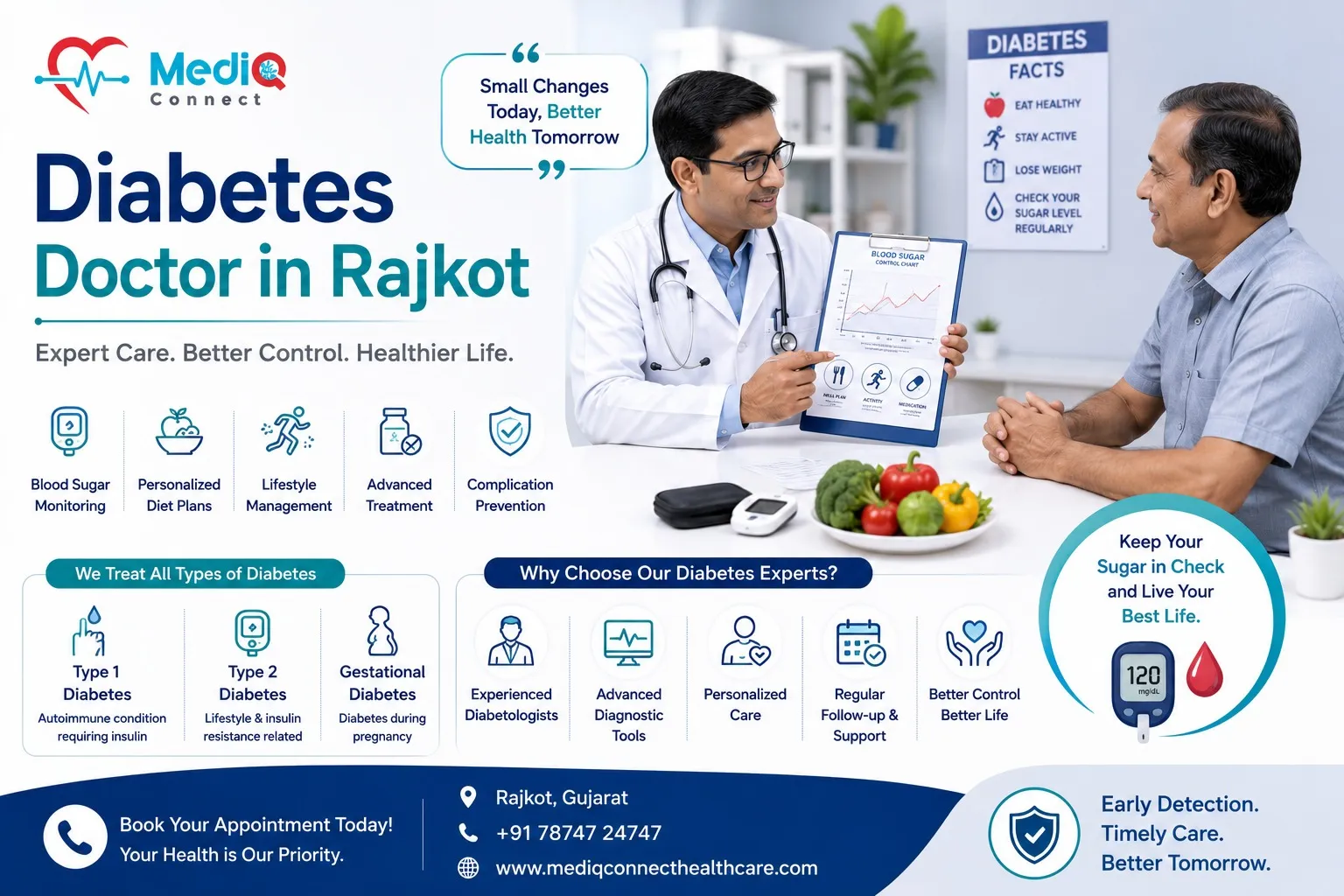



Diabetes Doctor in Rajkot: How to Choose the Right Specialist
A diabetes diagnosis - or even a borderline blood sugar report - tends to arrive with more questions than answers. What should you eat? Do you need insulin? How often should you get tested? The single biggest factor in getting clear, reliable answers is finding the right doctor early, not scrambling for one after a complication shows up, since diabetes managed well from the start tends to stay far more stable over the following years.
This guide walks through exactly how to find a qualified diabetes doctor in Rajkot, what the first visit actually involves, which tests matter, and how ongoing care typically works - so you can approach diabetes management with a plan instead of anxiety.
Diabetologist vs Endocrinologist vs General Physician - Who Do You Actually Need?
These three terms get used interchangeably, which creates real confusion for patients trying to figure out who to book with.
General Physician
Often the first point of contact - a general physician can diagnose diabetes, start basic treatment, and manage straightforward cases, especially early on or when blood sugar is well controlled with standard medication.
Diabetologist
A doctor with focused training and experience specifically in diabetes management - including complex insulin regimens, complication screening, and long-term care planning. This is usually who people mean when searching for a diabetes doctor in Rajkot for ongoing, dedicated care.
Endocrinologist
A specialist in hormonal disorders broadly, including diabetes, thyroid conditions, and other endocrine issues. Most endocrinologists are well-equipped to manage diabetes, and some diabetologists are, in fact, endocrinologists who focus heavily on diabetes care.
For routine, uncomplicated Type 2 diabetes, a general physician or diabetologist is usually sufficient. For Type 1 diabetes, pregnancy-related diabetes, or cases involving other hormonal complications, an endocrinologist is often the better fit - and either way, the earlier you connect with the right specialist, the more manageable long-term treatment tends to be.
Signs It's Time to See a Diabetes Doctor
Some symptoms are subtle enough that people live with them for months before connecting the dots. Watch for:
- Excessive thirst and frequent urination, especially at night
- Unexplained fatigue that doesn't improve with rest
- Blurred vision that comes and goes
- Slow-healing cuts or wounds
- Unexplained weight loss or, conversely, weight gain
- Tingling or numbness in the hands or feet
- A family history of diabetes combined with age over 40
If any of these sound familiar, that's a reasonable point to book with a diabetes doctor in Rajkot rather than waiting for symptoms to worsen - early diagnosis makes a measurable difference in long-term outcomes.
What to Look for in a Diabetes Doctor in Rajkot
Not every diabetes doctor approaches treatment the same way. Here's what separates genuinely good long-term care from a rushed prescription refill.
Qualifications
Look for an MD in Medicine with a focused diabetes practice, a DM in Endocrinology, or specific diabetology certifications (like a Fellowship in Diabetes). These credentials indicate structured training beyond general practice.
A Personalised, Not Generic, Approach
Diabetes management isn't one-size-fits-all - a good doctor adjusts treatment based on your specific numbers, lifestyle, other health conditions, and how your body responds over time, rather than applying the same protocol to every patient.
Access to Complication Screening
Diabetes affects the eyes, kidneys, nerves, and heart over time. A well-equipped diabetes doctor either performs or refers you for regular eye exams, kidney function tests, and nerve screening - not just blood sugar checks.
Clear Communication and Follow-Up Structure
You'll likely see this doctor repeatedly over years, sometimes decades. Choose someone who explains your reports in plain language and gives you a clear follow-up schedule rather than a vague "come back if needed."
What Happens at Your First Diabetes Consultation
Knowing what to expect makes the first visit considerably less intimidating.
- A detailed history - symptoms, family history, diet, activity levels, and any existing medications
- Physical examination, including weight, blood pressure, and sometimes a foot check
- A review of any existing blood test reports you bring along
- Orders for additional tests if your reports are incomplete or outdated
- An initial discussion of diet, lifestyle changes, and possibly medication, depending on your results
Bring any previous test reports, a list of current medications, and a few notes on your typical daily diet - this single habit speeds up diagnosis and treatment planning significantly.
Common Tests a Diabetes Doctor Will Order
Diagnosis and ongoing monitoring both rely on a small set of standard blood tests.
- Fasting Blood Sugar (FBS) - measures blood glucose after at least 8 hours without food
- Postprandial Blood Sugar (PPBS) - measures blood glucose roughly 2 hours after a meal
- HbA1c - reflects average blood sugar over the past 2–3 months, key for long-term monitoring
- Lipid Profile - checks cholesterol, since diabetes and heart disease risk are closely linked
- Kidney Function Tests (creatinine, microalbuminuria) - screens for early diabetic kidney involvement
- Thyroid Function Test - often checked alongside, since thyroid disorders are common alongside diabetes
Most of these are simple blood draws, and many diabetes doctors in Rajkot have in-house or partner labs, making it possible to get results the same day or within 24 hours.
Understanding Your Blood Sugar Numbers
The numbers on your report can feel abstract without context. Here's a general reference range for adults, though your doctor will interpret these specifically for your situation:
- Normal Fasting Blood Sugar: Below 100 mg/dL
- Prediabetes (Fasting): 100–125 mg/dL
- Diabetes (Fasting): 126 mg/dL or higher
- Normal HbA1c: Below 5.7%
- Prediabetes HbA1c: 5.7%–6.4%
- Diabetes HbA1c: 6.5% or higher
A single high reading doesn't automatically confirm diabetes - doctors typically confirm with a repeat test or a combination of results before finalising a diagnosis, so don't panic over one number alone.
Types of Diabetes and How Treatment Differs
Type 1 Diabetes
An autoimmune condition where the body stops producing insulin, usually diagnosed in childhood or young adulthood. Treatment requires lifelong insulin therapy, and management tends to be more intensive and closely monitored.
Type 2 Diabetes
The most common form, where the body becomes resistant to insulin or doesn't produce enough of it. Often manageable initially through diet, exercise, and oral medication, with insulin added later if needed.
Gestational Diabetes
Develops during pregnancy and usually resolves after delivery, though it increases the risk of Type 2 diabetes later in life. Requires close monitoring throughout pregnancy to protect both mother and baby.
Prediabetes
Blood sugar higher than normal but not yet in the diabetic range. This is a genuine window of opportunity - lifestyle changes at this stage can often prevent progression to full diabetes entirely.
Diabetes Complications a Good Doctor Screens For
Diabetes is a systemic condition - uncontrolled blood sugar affects far more than just energy levels. Regular screening catches problems early, when they're most treatable.
- Diabetic retinopathy - eye damage, screened through annual dilated eye exams
- Diabetic nephropathy - kidney damage, screened through blood and urine tests
- Diabetic neuropathy - nerve damage, often first noticed as tingling or numbness in the feet
- Cardiovascular disease - diabetes significantly raises heart disease and stroke risk
- Diabetic foot complications - reduced sensation and circulation increase infection and ulcer risk
A thorough diabetes doctor in Rajkot builds these screenings into your regular follow-up schedule rather than waiting for a complication to appear before checking for it.
Diet and Lifestyle Guidance You Should Expect
Medication alone rarely manages diabetes well - diet and activity levels play an equally significant role, and a good doctor will spend real time on this rather than treating it as an afterthought.
- A personalised meal plan considering your cultural food preferences, not a generic printed sheet
- Realistic exercise recommendations - often starting with something as simple as a daily 30-minute walk
- Guidance on carbohydrate portioning rather than complete elimination, which is rarely sustainable long-term
- Practical strategies for eating out, festivals, and family gatherings without derailing control entirely
- Weight management support, since even modest weight loss meaningfully improves blood sugar control in Type 2 diabetes
If your doctor's dietary advice feels generic or dismissive of your actual lifestyle, that's worth raising directly - sustainable diabetes management depends on a plan you can genuinely stick to, not just a theoretically ideal one, since even the best-designed diet plan is useless if it doesn't fit your real daily routine.
Consultation Costs and Follow-Up Frequency
Costs vary by doctor experience and clinic, but here's a realistic range for Rajkot in 2026:
- Initial consultation: ₹500–₹1,000
- Follow-up visits: ₹300–₹700
- HbA1c test: ₹400–₹800
- Comprehensive diabetes panel (sugar, lipid, kidney, thyroid): ₹1,200–₹2,500
Follow-up frequency depends on how well-controlled your blood sugar is - typically every 3 months for HbA1c monitoring if stable, more frequently if you're newly diagnosed, on insulin, or adjusting medication.
Common Myths About Diabetes, Debunked
Myth: Eating sugar directly causes diabetes
Sugar alone doesn't cause diabetes - the real drivers are a mix of genetics, excess body weight, physical inactivity, and insulin resistance developing over time. Diet matters, but it's one piece of a larger picture, not a single-cause explanation.
Myth: Once you're on insulin, it means your diabetes has gotten "worse"
Insulin is simply one of several treatment tools, not a marker of failure or severity. Some people need it early, others only after years of oral medication - it reflects your body's specific insulin production, not how well you've managed the condition.
Myth: People with diabetes can't eat fruit
Most fruits, eaten in reasonable portions, fit into a diabetes-friendly diet just fine. Portion size and pairing with protein or fibre matter more than eliminating fruit entirely.
Myth: Diabetes only affects older adults
Type 1 diabetes is frequently diagnosed in children and young adults, and Type 2 diabetes is increasingly appearing in younger populations due to lifestyle factors - age is a risk factor, not a requirement.
Myth: If you feel fine, your blood sugar must be under control
High blood sugar often causes no noticeable symptoms for years, which is exactly why regular testing matters even when you feel completely well - this is part of why diabetes is sometimes called a "silent" condition.
Insulin Therapy: What to Expect
Starting insulin can feel like a significant shift, but modern insulin therapy is far more manageable than many people expect.
- Insulin pens have largely replaced traditional vials and syringes, making dosing simpler and less intimidating
- Your doctor will start with a specific type and dose based on your blood sugar patterns, adjusting over the following weeks
- Injection technique and site rotation are usually taught hands-on during your visit, not just explained verbally
- Regular monitoring in the first few weeks helps fine-tune the dose to your body's actual response
Many patients find that once the initial adjustment period passes, insulin therapy becomes a routine part of daily life rather than the disruptive change they anticipated.
Blood Sugar Monitoring: Glucometers vs Continuous Glucose Monitors
Regular monitoring is central to effective diabetes management, and technology has made this considerably easier in recent years.
Traditional Glucometers
A finger-prick device giving a single point-in-time reading. Affordable and widely available, glucometers remain the standard tool for most people managing diabetes through periodic checks.
Continuous Glucose Monitors (CGM)
A small sensor worn on the skin that tracks blood sugar continuously throughout the day and night, showing trends rather than isolated readings. Particularly useful for people on insulin or those wanting a more detailed picture of how specific foods and activities affect their levels.
Your diabetes doctor can advise which monitoring approach fits your treatment plan and budget - CGMs are more expensive but increasingly popular for the detailed insight they provide.
Exercise Guidance for Diabetes Management
Physical activity improves insulin sensitivity and helps regulate blood sugar, making it one of the most effective non-medication tools available.
- Aim for at least 150 minutes of moderate activity per week, such as brisk walking, spread across most days
- Combine aerobic activity with light resistance training a couple of times a week for added benefit
- Check blood sugar before and after exercise if you're on insulin or medications that can cause low blood sugar
- Carry a fast-acting sugar source during exercise in case of a low blood sugar episode
Even modest daily activity - a 20–30 minute walk after meals - has been shown to meaningfully improve post-meal blood sugar levels, making it one of the simplest changes with real impact.
The Emotional Side of a Diabetes Diagnosis
A diabetes diagnosis, or even a prediabetes warning, often brings a mix of anxiety, frustration, or denial - and that's a completely normal response to managing a lifelong condition.
A good diabetes doctor acknowledges this emotional weight rather than only focusing on numbers. Many clinics also connect patients with diabetes educators or support groups, which can make a genuine difference in staying consistent with treatment over the long run rather than feeling isolated with the diagnosis.
Managing Diabetes During Festivals and Travel
Festivals, weddings, and travel are common points where diabetes management gets genuinely harder - but a few practical strategies help maintain control without missing out entirely.
- Plan indulgences rather than avoiding them entirely - a small portion of a festive sweet, balanced with an otherwise controlled meal, is more sustainable than strict avoidance followed by an eventual binge
- Keep medication and monitoring supplies easily accessible while travelling, including a buffer supply in case of delays
- Stay hydrated and maintain some activity even during travel, such as short walks during breaks
- Check blood sugar more frequently during unusual routines, since travel and festival schedules disrupt normal eating and activity patterns
Discuss upcoming events with your diabetes doctor in advance if you're concerned - many are happy to adjust medication timing temporarily to accommodate a wedding or festival without derailing overall control.
Diabetes Care for Elderly Patients
Diabetes management in older adults often needs a different approach than in younger patients, balancing blood sugar control with other health considerations.
- Target blood sugar ranges may be slightly relaxed to reduce the risk of dangerous low blood sugar episodes
- Medication regimens are often simplified to reduce the risk of dosing errors
- Regular foot checks become especially important, since reduced sensation and circulation issues are more common with age
- Coordination with other specialists treating age-related conditions - heart disease, kidney issues - becomes a bigger part of care
If you're managing diabetes for an elderly parent, home consultation options can make regular follow-ups considerably easier than repeated clinic visits, especially if mobility is a challenge.
Government vs Private Diabetes Care in Rajkot
Both government and private healthcare options are available for diabetes management in Rajkot, each with different trade-offs worth understanding.
- Government hospitals: Lower or no cost for consultations and many medications, though wait times can be longer and appointment slots less flexible
- Private clinics and hospitals: Higher cost but typically shorter wait times, more flexible scheduling, and often faster access to specialised tests and technology like CGMs
Many patients use a mix - government facilities for routine medication refills and private consultation for more detailed check-ups or complication screening. What matters most is consistency, regardless of which system you primarily use.
Diabetes and Related Conditions: What Else to Watch For
Diabetes rarely exists in isolation - several related conditions commonly show up alongside it, and a thorough doctor keeps an eye on all of them rather than focusing narrowly on blood sugar alone.
- High blood pressure - extremely common alongside diabetes and a major driver of complications when uncontrolled
- High cholesterol - often managed alongside diabetes since both significantly affect cardiovascular risk
- Fatty liver disease - increasingly recognised as closely linked to insulin resistance
- Sleep apnea - more common in people with Type 2 diabetes, particularly those carrying excess weight
- Depression and anxiety - chronic disease management takes a genuine emotional toll worth addressing directly
A comprehensive diabetes doctor screens for these related conditions as part of routine care, rather than treating diabetes as an isolated number to manage.
Diabetic Foot Care: A Small Habit With a Big Impact
Foot complications are among the most preventable yet most serious diabetes-related issues, largely because reduced sensation means injuries can go unnoticed until they've become serious.
- Check your feet daily for cuts, blisters, redness, or swelling - a mirror helps with hard-to-see areas
- Keep feet clean and moisturised, but avoid moisture between the toes, which encourages fungal infection
- Wear well-fitted, closed shoes rather than walking barefoot, even at home
- See your doctor promptly for any wound that isn't healing within a few days, rather than waiting to see if it improves on its own
Many diabetes clinics offer a dedicated foot examination as part of routine follow-up - ask about this specifically if it hasn't come up at your visits, since it's easy to overlook amid other priorities.
Choosing Between a Solo Practice and a Multi-Specialty Hospital
Diabetes doctors in Rajkot practise in a range of settings, from independent clinics to large multi-specialty hospitals, and each has genuine advantages depending on your situation.
Independent Diabetology Clinics
Often offer more personalised attention, shorter wait times, and a consistent doctor-patient relationship over the years - well suited to routine, ongoing management.
Multi-Specialty Hospitals
Provide easier access to related specialists (cardiology, nephrology, ophthalmology) under one roof, which is particularly valuable if you're managing multiple complications or need coordinated care across specialities.
Neither setting is universally better - the right choice depends on how complex your case is and whether you value continuity with one doctor or convenient access to a broader team.
Building a Long-Term Relationship With Your Diabetes Doctor
Diabetes is a lifelong condition for most patients, which means your relationship with your doctor is likely to span years, not a single treatment course. Continuity genuinely matters here - a doctor who has followed your numbers over time can spot subtle trends that a first-time visit would miss entirely.
Come prepared to each visit with your monitoring logs, a list of any new symptoms, and questions about anything that's unclear. Patients who actively participate in their care - rather than passively receiving a prescription - consistently achieve better long-term blood sugar control.
A Quick Reference Checklist Before You Book
Before finalising a diabetes doctor in Rajkot, run through this checklist one more time:
- ✔ MD/DM/Diabetology fellowship, verified credentials
- ✔ Builds complication screening (eyes, kidneys, nerves, heart) into routine follow-ups
- ✔ Offers a personalised, realistic diet and lifestyle plan, not a generic printout
- ✔ Transparent consultation fees and clear follow-up schedule
- ✔ Comfortable, unhurried communication style
- ✔ Available across clinic, video, or home consultation formats depending on your needs
A doctor who checks most of these boxes is very likely a strong long-term fit - and for a chronic condition like diabetes, that long-term relationship matters more than almost any single visit.
Managing Diabetes During Pregnancy (Gestational Diabetes)
Gestational diabetes needs specialised, closely monitored care since it affects both mother and baby. If you're diagnosed during pregnancy, your obstetrician will typically coordinate with a diabetologist or endocrinologist for combined management.
This usually includes more frequent blood sugar monitoring, a carefully structured diet plan, and sometimes insulin if diet and exercise alone aren't sufficient to keep levels in target range. Most women return to normal blood sugar after delivery, but should be re-tested a few months postpartum, since gestational diabetes raises future Type 2 diabetes risk.
Red-Flag Symptoms That Need Urgent Attention
Most diabetes management is a steady, long-term process - but a few symptoms need immediate medical attention rather than waiting for your next scheduled visit.
- Very high blood sugar with confusion, rapid breathing, or fruity-smelling breath (signs of diabetic ketoacidosis)
- Very low blood sugar with shakiness, sweating, confusion, or loss of consciousness
- A foot wound or ulcer that isn't healing or shows signs of infection
- Sudden vision changes or vision loss
- Chest pain or shortness of breath
Any of these warrant an emergency room visit or an urgent call to your diabetes doctor - don't wait for a routine follow-up appointment if you notice these symptoms.
How MediQConnect Helps You Find a Diabetes Doctor in Rajkot
Comparing qualifications, reading through scattered reviews, and calling multiple clinics to check fees takes real time and effort. MediQConnect brings all of that together in one place to help you find a genuinely qualified diabetes doctor in Rajkot.
- Verified doctor profiles with clear qualifications, experience, and specialisation listed upfront
- Transparent consultation fees before you book, with no surprises at the counter
- Appointment booking for in-clinic visits, home consultations, or video calls
- Genuine patient reviews to help you compare doctors honestly before committing
Whether you need a first-time diagnosis workup or you're looking for a new doctor after moving to Rajkot, you can compare verified profiles and book an appointment in a few minutes, without the back-and-forth of multiple phone calls to check availability and fees. This is often the fastest way to move from an uncertain lab report to an actual treatment plan with someone qualified to guide you through it.
If you're managing a family's health more broadly, our guide to the best pediatrician in Rajkot covers a similar framework for choosing the right doctor for your children.
You can also browse verified doctors near me in Rajkot across all specialities, including cardiology and nephrology, if your diabetes doctor refers you for a complication check-up.
For routine follow-ups once your treatment plan is stable, see our guide to video consultation with a doctor in Rajkot, which explains when a video visit works well for ongoing care.
For elderly patients or those with mobility challenges, our guide to doctor consultation at home in Rajkot explains how in-home diabetes follow-ups work.
Frequently Asked Questions
Who is the best diabetes doctor in Rajkot?
There's no single universal answer - the right fit depends on whether you need a diabetologist, endocrinologist, or general physician, along with your specific complications and treatment stage. Use the checklist in this guide - qualifications, complication screening, and communication style - to compare verified profiles on MediQConnect and find the diabetes doctor in Rajkot for your specific situation.
When should I see a diabetes doctor instead of a general physician?
See a diabetes specialist if you have Type 1 diabetes, complex insulin requirements, diabetes-related complications, or if a general physician's initial treatment isn't achieving good blood sugar control. Straightforward, well-controlled Type 2 diabetes can often be managed by a general physician alone.
What tests are done to diagnose diabetes?
Diagnosis typically relies on Fasting Blood Sugar, Postprandial Blood Sugar, and HbA1c tests, sometimes confirmed with a repeat test. Additional tests like lipid profile and kidney function are often ordered alongside to get a fuller picture of overall health.
How much does a diabetes consultation cost in Rajkot?
Initial consultations typically range from ₹500 to ₹1,000, with follow-up visits usually costing ₹300 to ₹700. MediQConnect displays exact fees on each doctor's profile before you book.
Can Type 2 diabetes be reversed?
In some cases, particularly with early diagnosis, significant weight loss, and sustained lifestyle change, blood sugar can return to normal ranges without medication - sometimes referred to as remission. This isn't guaranteed for everyone and should be pursued under medical supervision, not through unsupervised drastic diet changes.
How often should a diabetic get an HbA1c test?
Generally every 3 months if blood sugar isn't yet well controlled, and every 6 months once levels are stable and consistently within target range, though your doctor may recommend a different frequency based on your specific case.
Do I need to see a diabetes doctor if I only have prediabetes?
Yes - prediabetes is a genuine window to prevent progression to full diabetes, and a doctor can guide specific, personalised lifestyle changes that are considerably more effective than generic advice found online.
Can diabetes be managed without medication?
For some people with prediabetes or early Type 2 diabetes, diet and exercise alone can achieve good control. This should be guided by a doctor, since blood sugar needs to be monitored closely to confirm the approach is genuinely working.
What's the difference between a diabetologist and an endocrinologist for treatment purposes?
For most Type 2 diabetes cases, either is well-equipped to manage treatment effectively. An endocrinologist becomes especially useful if you have other hormonal conditions alongside diabetes, such as thyroid disorders, since they're trained across the broader endocrine system rather than diabetes alone.
How soon after diagnosis should I start treatment?
Generally as soon as possible - early treatment, even for prediabetes, meaningfully reduces the risk of long-term complications. Delaying treatment while blood sugar remains uncontrolled allows silent damage to accumulate even without noticeable symptoms.
Can stress affect blood sugar levels?
Yes - stress hormones can raise blood sugar independent of diet, which is one reason doctors often ask about stress and sleep alongside diet and medication when blood sugar control seems inconsistent despite a stable routine.
Final Thoughts Before Your First Visit
Diabetes management works best as a partnership - your doctor brings the medical expertise, and you bring the daily consistency of monitoring, diet, and activity that no prescription alone can replace. Neither side of that partnership works well without the other.
If you've been putting off that first appointment, whether from a borderline report or a family history you've been meaning to act on, this is genuinely one of those situations where earlier is better. The sooner you have a clear plan in place, the more manageable diabetes becomes as a part of daily life rather than a source of constant worry.
Think of the first consultation not as a verdict, but as the starting point of a plan - most people who commit to consistent follow-up find that diabetes management becomes far less daunting after the first few months than it initially felt on diagnosis day.
One Last Practical Tip
Keep a simple folder - physical or digital - with every diabetes-related report, prescription, and doctor's note in one place. It sounds minor, but having your full history organised and ready saves real time at every future visit, and gives any new doctor a much clearer picture if you ever need a second opinion or switch clinics.
Conclusion: Finding a Doctor Who Manages the Whole Picture
Choosing a diabetes doctor in Rajkot isn't just about getting a prescription - it's about finding a doctor who screens for complications, personalises your diet and lifestyle plan, and stays engaged with your care over years, not just a single visit. Use the checklist in this guide, ask direct questions at your first appointment, and don't hesitate to switch doctors if the fit isn't right for your specific needs.
When you're ready to book, MediQConnect makes it simple to compare verified diabetes doctors in Rajkot, check transparent fees, and choose the consultation format that works best for you.
Ready to take the next step? view doctors across specialities on MediQConnect and book your diabetes consultation today.