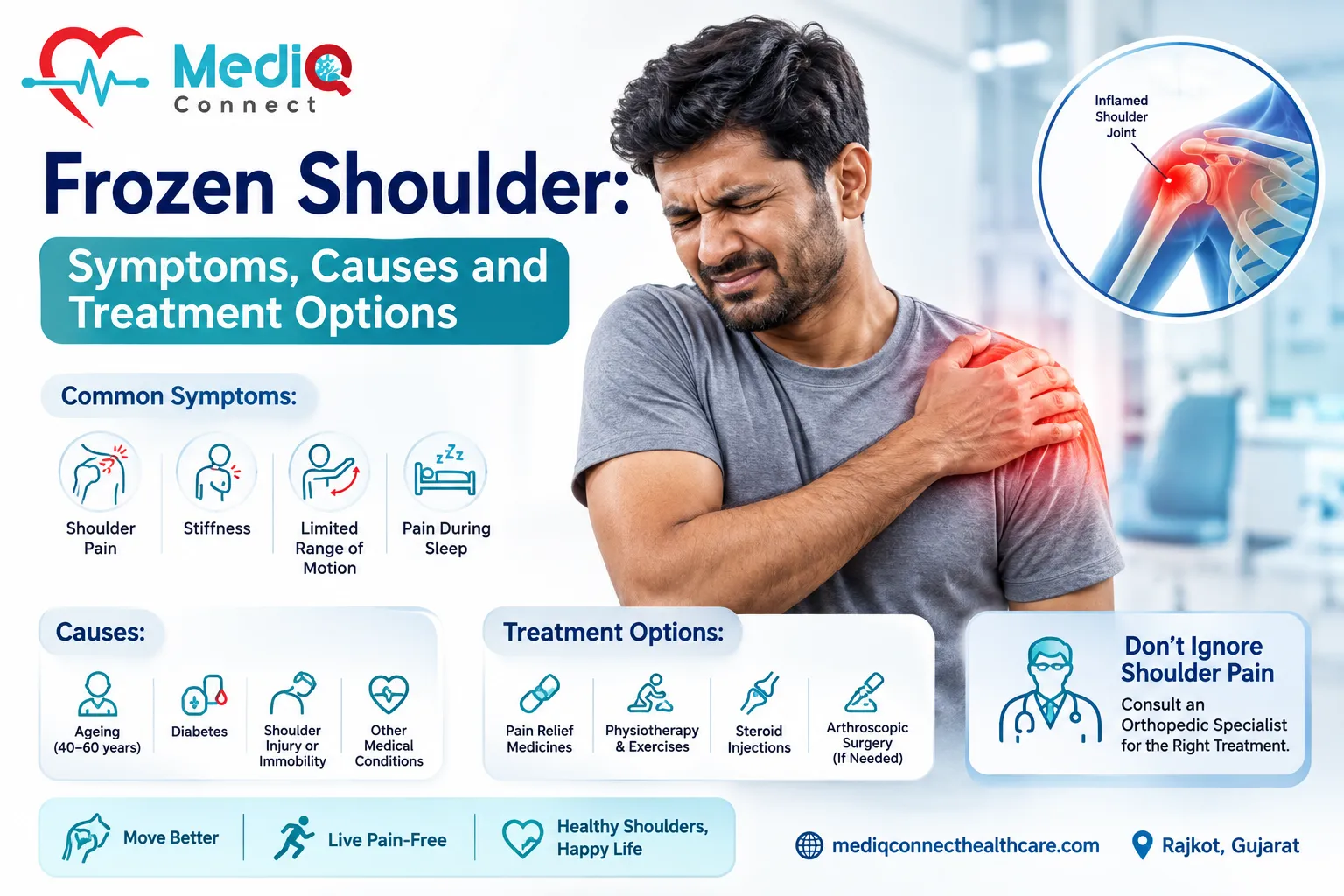



Frozen Shoulder: Symptoms, Causes and Treatment Options
Frozen shoulder is one of those conditions that often catches people off guard, since it can develop gradually without any specific injury and slowly limit movement most people take for granted, like reaching overhead, buttoning a shirt, or fastening a seatbelt behind their body.
Understanding frozen shoulder treatment starts with recognising that this is a genuinely slow condition, often unfolding over many months, which means both patience and the right approach matter more than a quick fix.
This guide walks through the symptoms and causes of frozen shoulder, what to expect at each stage, and the frozen shoulder treatment options worth discussing with an orthopedic doctor, so you know what a realistic recovery actually looks like and can plan your daily life around it with more confidence.
What Is Frozen Shoulder?
Frozen shoulder, medically known as adhesive capsulitis, occurs when the connective tissue capsule surrounding the shoulder joint becomes thickened, tight, and inflamed, restricting movement in the joint.
The name reflects how the condition progresses: pain initially limits movement, and reduced use of the shoulder then allows the capsule to tighten further, creating a cycle that gradually "freezes" the joint in place until treatment or time eventually breaks that cycle.
Discussions of frozen shoulder treatment often begin here, because understanding this underlying mechanism explains why both movement and time play such central roles in recovery, rather than expecting a single quick fix to resolve everything at once.
A Quick Glossary: Terms Worth Knowing
- Adhesive capsulitis - the medical term for frozen shoulder
- Active range of motion - how far you can move your shoulder on your own
- Passive range of motion - how far your shoulder can move with assistance from someone else
- Arthroscopic capsular release - a minimally invasive surgery used for resistant cases
- Rotator cuff - a group of muscles and tendons that stabilise the shoulder, sometimes confused with frozen shoulder symptoms
Understanding these terms makes it easier to follow along when your doctor explains a diagnosis or discusses treatment options.
Managing Nighttime Pain
Pain that worsens at night is one of the most disruptive symptoms of frozen shoulder, often making it difficult to find a comfortable sleeping position, particularly when lying on the affected side.
Sleeping on the unaffected side with a pillow supporting the affected arm can help reduce pressure on the joint. Some people also find relief propping the arm slightly with additional pillows.
If nighttime pain is significantly disrupting your sleep, mention this specifically to your doctor, since it may indicate a need for adjusted frozen shoulder treatment rather than something to simply tolerate.
Who Is Most at Risk?
Frozen shoulder most commonly affects adults between the ages of 40 and 60, and occurs more often in women than men, though the exact reasons for this difference are not fully understood.
- Diabetes, which significantly increases the risk of developing frozen shoulder
- Thyroid conditions, both overactive and underactive
- A period of shoulder immobilisation, such as after surgery, a fracture, or a stroke
- Autoimmune conditions affecting connective tissue
If you fall into one of these higher-risk groups and notice early shoulder stiffness, mentioning your risk factors to a doctor promptly can support earlier diagnosis and more effective care.
Symptoms of Frozen Shoulder
The hallmark symptom of frozen shoulder is a genuine restriction in movement, meaning the shoulder cannot move fully even with help from another person, not just discomfort during movement.
- Deep, aching pain in the shoulder, often worse at night
- Progressive difficulty raising the arm overhead or reaching behind the back
- Stiffness that limits everyday tasks like dressing or reaching for objects
- Usually affects one shoulder, though it can occur in both, sometimes at different times
This combination of pain and genuinely restricted movement, rather than pain alone, is what distinguishes frozen shoulder from other common shoulder issues, and recognising this distinction early can meaningfully speed up getting an accurate diagnosis rather than assuming it is a routine muscle strain.
How Frozen Shoulder Affects Daily Life
Beyond the physical discomfort, frozen shoulder can genuinely interfere with everyday tasks like dressing, reaching for items on high shelves, or even simple activities like washing your hair.
For people whose work involves overhead reaching or repetitive shoulder movement, frozen shoulder treatment may need to be paired with temporary workplace adjustments to avoid aggravating symptoms during recovery, particularly in physically demanding roles.
Being upfront with employers or family members about these limitations, rather than quietly struggling through them, generally leads to more practical support during a recovery process that can take many months.
The Three Stages of Frozen Shoulder
Frozen shoulder typically progresses through three distinct stages, and understanding each one helps set realistic expectations for frozen shoulder treatment and recovery timelines.
Stage 1: Freezing
This stage involves gradually worsening pain and a noticeable decrease in shoulder mobility. It typically lasts six weeks to nine months, and pain is often the most prominent symptom during this period.
Stage 2: Frozen
Pain may lessen during this stage, but stiffness remains significant, often making daily activities genuinely difficult. This stage generally lasts four to six months.
Stage 3: Thawing
Movement gradually improves during this final stage, which can last anywhere from six months to two years. Most people regain close to their full range of motion by the end of this stage.
Altogether, frozen shoulder can take one to three years to fully resolve, which is why patience and consistency matter more than expecting a quick recovery.
What Causes Frozen Shoulder?
The exact cause of frozen shoulder is not fully understood, though it is believed to involve inflammation that leads to progressive thickening of the shoulder capsule's connective tissue.
Some cases develop after a period of forced immobility, such as recovering from surgery, a fracture, or a stroke, where reduced shoulder movement over time contributes to capsule tightening.
In many cases, however, frozen shoulder develops without any clear triggering event, which can be frustrating for patients looking for a specific explanation before starting frozen shoulder treatment.
A Quick Checklist Before Your Appointment
- Note when the stiffness and pain started and how they have progressed
- Track which specific movements are most restricted
- List any diabetes, thyroid, or autoimmune conditions
- Note any recent surgery, injury, or period of immobilisation
- Prepare two or three specific questions you want answered
When to Consider a Second Opinion
If a recommended frozen shoulder treatment does not seem to be helping after a reasonable trial period, or surgery is suggested earlier than expected, seeking a second opinion is a reasonable step.
Bring your existing imaging and treatment history to the second consultation so the new doctor can review your case efficiently rather than starting the diagnostic process from scratch.
Data Privacy When Discussing Your Symptoms Online
Booking a consultation or storing medical records digitally involves sharing personal health information, so it is reasonable to want clarity on how a platform handles this data.
MediQConnect outlines its approach in its published privacy policy and terms and conditions. Reviewing these briefly before your first booking is a sensible habit.
How Frozen Shoulder Is Diagnosed
A doctor typically diagnoses frozen shoulder based on your symptom history and a physical examination assessing both active movement (which you control) and passive movement (movement assisted by the doctor).
Imaging such as an X-ray or MRI is not always necessary to confirm frozen shoulder, but may be used to rule out other causes of shoulder pain and stiffness, such as a rotator cuff tear or arthritis.
A key diagnostic clue is that both active and passive movement are restricted in frozen shoulder, whereas conditions like rotator cuff injuries typically restrict active movement more than passive movement.
Comparing MediQConnect to Generic Health Directories
- Verification: MediQConnect confirms credentials and registration before listing a doctor
- Fee transparency: consultation charges are displayed upfront
- Consultation options: both in-clinic and video consultation are available where offered
- Local focus: listings are specific to Rajkot, not a generic nationwide template
This structured approach means patients researching treatment options can move from information-gathering to booking a real consultation without losing trust along the way.
Common Mistakes to Avoid
- Avoiding all shoulder movement out of fear of pain, which can worsen stiffness
- Pushing too aggressively into painful stretches too early
- Expecting quick results and abandoning treatment out of frustration
- Ignoring underlying conditions like diabetes that may be slowing recovery
- Delaying evaluation, assuming shoulder stiffness will resolve on its own
Avoiding these mistakes generally leads to steadier progress and a less frustrating overall recovery experience.
Frozen Shoulder Treatment Options
Most cases of frozen shoulder improve with conservative, non-surgical frozen shoulder treatment, particularly when started early. The right combination depends on which stage you are in and how severe your symptoms are.
Physical Therapy
Physical therapy focused on gentle stretching and gradually restoring range of motion is considered the primary approach in most frozen shoulder treatment plans, particularly once acute pain has settled somewhat.
Anti-Inflammatory Medication
Over-the-counter or prescription anti-inflammatory medication can help manage pain, particularly during the painful freezing stage, though this should be used under medical guidance.
Corticosteroid Injections
Injections directly into the shoulder joint can meaningfully reduce pain and inflammation, often making it easier to participate in physical therapy as part of a broader frozen shoulder treatment plan.
Joint Distension
This procedure involves injecting sterile fluid into the shoulder capsule to stretch the tissue, which can help improve mobility for some patients when combined with other treatments.
Heat and Cold Therapy
Alternating heat and cold applications can provide symptomatic relief, with heat generally helpful before movement and cold useful after activity to manage inflammation.
Surgery
Surgery, typically arthroscopic capsular release, is reserved for cases that do not respond to conservative frozen shoulder treatment after six to nine months, and is generally successful at restoring mobility when needed.
Gentle Exercises Often Recommended During Recovery
Specific exercises are usually introduced gradually as part of physical therapy, tailored to your current stage of frozen shoulder. A physical therapist should guide exercise selection rather than following generic routines.
- Pendulum stretch, gently swinging the arm in small circles while leaning forward
- Towel stretch, using a towel behind the back to gently assist shoulder movement
- Finger walk, "walking" the fingers up a wall to gradually increase reach
- Cross-body reach, gently stretching the affected arm across the chest
These exercises are generally introduced once acute pain has settled somewhat, since exercising too aggressively during the most painful early phase can sometimes worsen symptoms.
Managing Diabetes and Thyroid Conditions Alongside Treatment
Since diabetes and thyroid conditions are significant risk factors for frozen shoulder, managing these underlying conditions well is often considered part of a complete treatment approach.
For diabetic patients specifically, working with your primary doctor or endocrinologist to optimise blood sugar control alongside orthopedic treatment may support faster recovery.
This connection is a good example of why recovery sometimes involves coordination between an orthopedic doctor and other specialists managing related health conditions.
How Long Does Recovery Really Take?
One of the hardest parts of frozen shoulder is the timeline. Unlike many injuries that resolve in weeks, frozen shoulder treatment often spans many months to a few years before full mobility returns.
Early treatment does not necessarily shorten the total timeline dramatically, but it generally improves comfort throughout the process and may help prevent the condition from becoming more severe.
Setting realistic expectations from the start, rather than expecting rapid improvement, helps avoid the frustration that often comes from comparing frozen shoulder recovery to more typical injury timelines.
Myths and Facts About Frozen Shoulder
- Myth: Frozen shoulder always requires surgery. Fact: Most cases resolve with conservative, non-surgical treatment over time.
- Myth: Complete rest is the best approach. Fact: Gentle, guided movement is generally more effective than avoiding all activity.
- Myth: Frozen shoulder only affects older adults. Fact: It most commonly affects adults aged 40 to 60, not exclusively the elderly.
- Myth: Once frozen, the shoulder never fully recovers. Fact: Most people regain close to full range of motion, though it can take one to three years.
How MediQConnect Helps You Find the Right Specialist
Finding a qualified orthopedic doctor for frozen shoulder treatment should not add stress to an already frustrating condition. MediQConnect lists verified orthopedic specialists across Rajkot, with clear registration details, experience, and consultation fees displayed upfront.
Our detailed guide on the best orthopedic doctors in Rajkot covers what to look for before booking, and you can choose between an in-clinic visit or a video consultation for follow-up discussions.
Every listed doctor goes through a verification process before appearing in search results, so when starting a treatment process that may involve many months of care, you can feel confident about who you are working with.
Real-World Scenarios: How People Experience Frozen Shoulder
Scenario 1: A Diabetic Patient With Gradual Onset
Someone with type 2 diabetes notices gradually worsening shoulder stiffness without any injury. Early diagnosis and coordinated care between their endocrinologist and orthopedic doctor supports a smoother recovery process.
Scenario 2: Frozen Shoulder After Surgery
Someone recovering from an unrelated arm fracture develops frozen shoulder after weeks of immobilisation. Physical therapy is introduced gradually as healing allows, addressing both the fracture and the developing stiffness.
Scenario 3: Persistent Symptoms Requiring Injections
Someone in the painful freezing stage struggles to participate in physical therapy due to pain. A corticosteroid injection reduces discomfort enough to allow more effective participation in guided stretching.
Each of these scenarios reflects a different path through frozen shoulder treatment, illustrating why a personalised plan generally works better than a single generic approach.
Related Shoulder Conditions Sometimes Confused With Frozen Shoulder
Rotator Cuff Tear
A rotator cuff tear typically causes pain and weakness with specific movements, but usually allows fuller passive range of motion compared to the significant restriction seen in frozen shoulder.
Shoulder Arthritis
Arthritis in the shoulder joint can cause pain and stiffness, but is generally accompanied by different findings on imaging and tends to affect older patients with joint wear rather than capsule thickening.
Shoulder Impingement
Impingement typically causes pain during specific overhead movements rather than the broad, persistent restriction across all directions seen in frozen shoulder.
None of these should be self-diagnosed based on symptoms alone. A proper examination helps distinguish between these conditions, since the recommended treatment can differ significantly.
How MediQConnect Approaches Medical Content Accuracy
This guide, and others across the MediQConnect blog, are written to reflect general, well-established medical information intended for education and awareness, not to replace a professional diagnosis.
Content covering topics like frozen shoulder treatment is reviewed for accuracy against general medical consensus, and we consistently direct readers toward a qualified orthopedic doctor for anything specific to their individual health.
Understanding Treatment Costs
Costs for frozen shoulder treatment vary based on which combination of physical therapy, medication, injections, or in rare cases surgery is required, and typically add up over a longer period given the extended treatment timeline.
MediQConnect displays consultation charges upfront on each doctor's profile, so you can plan ahead. If you have health insurance, confirm in advance which treatments, such as physical therapy sessions or injections, are covered under your specific policy.
Supporting a Family Member With Frozen Shoulder
If a parent or family member is dealing with frozen shoulder, understanding that this is a genuinely slow condition can help you offer more patient, realistic support rather than expecting quick improvement.
Practical help with daily tasks that require overhead reaching or two-handed movement can meaningfully ease the frustration of living with restricted shoulder mobility during recovery.
In-Clinic vs. Video Consultation for Frozen Shoulder
An initial video consultation can be a reasonable first step to discuss your symptoms and history, especially for follow-up conversations once a diagnosis and treatment plan are already established.
A physical examination, however, will require an in-clinic visit, since assessing both active and passive range of motion directly is central to an accurate diagnosis that cannot be replicated over video.
How MediQConnect Verifies Its Orthopedic Doctors
Every orthopedic doctor listed on MediQConnect goes through a defined onboarding process before appearing in search results, confirming their degree, state medical council registration, current practice location, and specialisation.
This matters considerably given how long a frozen shoulder recovery journey can be, since patients benefit from building a consistent relationship with one verified doctor over many months rather than switching providers repeatedly.
Questions to Ask Before Starting Treatment
- Which stage of frozen shoulder do you believe I am currently in?
- What is the realistic timeline for my specific case?
- Should I pursue physical therapy now, or wait until pain settles further?
- Are injections appropriate for my situation, and what are the risks?
- What signs would suggest I need to consider surgery?
Writing these down beforehand ensures nothing important gets forgotten during the appointment itself.
What to Expect at Your First Consultation
Be prepared to describe when your symptoms started, whether any injury or surgery preceded them, and which specific movements are most restricted, since these details help your doctor assess your current stage.
Mention any diabetes, thyroid conditions, or other relevant health history, since these directly influence your risk profile and may affect the recommended treatment approach.
Making the Platform Easy to Use for Every Patient
A verification-first platform is only genuinely useful if booking is also simple, particularly for patients dealing with pain and limited mobility. MediQConnect's search and booking flow is designed to be straightforward.
Family members can also book on behalf of an elderly parent or relative managing frozen shoulder, which can reduce the friction that sometimes delays a first orthopedic visit.
Long-Term Monitoring During Recovery
Given how long frozen shoulder recovery can take, periodic follow-up visits help track whether your range of motion is genuinely improving or whether the treatment plan needs adjustment.
This is particularly relevant during the frozen stage, when pain may lessen even though stiffness remains, making it easy to underestimate how much progress has actually occurred without an objective assessment.
People Also Ask
What are the early signs of frozen shoulder?
Early signs include gradually worsening shoulder pain, often worse at night, along with increasing difficulty raising the arm overhead or reaching behind the back.
How long does frozen shoulder treatment take to work?
Frozen shoulder generally resolves over one to three years across its three stages. Treatment can improve comfort and support recovery, but does not typically shorten the overall timeline dramatically.
Is frozen shoulder the same as a rotator cuff injury?
No. Frozen shoulder restricts both active and passive movement, while rotator cuff injuries typically restrict active movement more than passive movement. A doctor can distinguish between the two during examination.
Can frozen shoulder go away without treatment?
It often improves on its own over time, but treatment can meaningfully improve comfort and function throughout the process, and is generally recommended rather than waiting it out untreated.
Does frozen shoulder always require surgery?
No. Most cases are managed successfully with physical therapy, medication, and injections. Surgery is reserved for cases that do not improve after six to nine months of conservative treatment.
Is diabetes linked to frozen shoulder?
Yes. Diabetes is one of the most significant risk factors for developing frozen shoulder, and managing blood sugar well is often considered part of a complete treatment approach.
Can frozen shoulder affect both shoulders?
Yes, in about a third of cases, though usually not at the exact same time. Having frozen shoulder in one shoulder does increase the risk of it developing in the other.
What is the difference between frozen shoulder and a rotator cuff injury?
Frozen shoulder restricts both active and passive movement broadly, while rotator cuff injuries typically cause pain and weakness with specific movements but allow fuller passive range of motion.
Can exercise make frozen shoulder worse?
Aggressive or poorly timed exercise can worsen pain, which is why a physical therapist should guide exercise selection based on your specific stage rather than following generic routines.
When is surgery recommended for frozen shoulder?
Surgery is generally considered only after six to nine months of conservative treatment without meaningful improvement, and is usually successful at restoring mobility when needed.
The Emotional Side of a Long Recovery
Living with restricted mobility for months at a time can be genuinely discouraging, particularly when progress feels slow or invisible from week to week during the frozen stage.
Tracking small improvements, such as a slight increase in how far you can reach, can help maintain motivation during a recovery process that does not always feel like it is moving forward.
It is reasonable to mention frustration or low mood to your doctor if the prolonged recovery is affecting you emotionally, since this is a normal and valid part of managing a slow-healing condition.
Can Frozen Shoulder Be Prevented?
There is no guaranteed way to prevent frozen shoulder, particularly since many cases develop without any identifiable trigger. However, some precautions may reduce risk in specific situations.
After any injury or surgery requiring temporary shoulder immobilisation, following your doctor's guidance on gentle movement as soon as it is safe to do so may help reduce the risk of capsule stiffening.
For those with diabetes or thyroid conditions, keeping these conditions well managed may also reduce overall risk, though it does not guarantee frozen shoulder will not develop.
Choosing Between Multiple Verified Doctors
It is common to find more than one verified orthopedic doctor with similar experience. In these cases, small details can help you decide - consulting language, sub-specialisation in shoulder conditions, or simply which time slots line up with your schedule.
There is no single "correct" choice in these situations. What matters is that every option in front of you has already cleared the same verification bar, so the decision comes down to genuine preference rather than guessing which listing can actually be trusted.
Adapting Daily Habits During Recovery
Small adjustments, like using the unaffected arm for tasks requiring overhead reach or asking for help with activities like fastening clothing, can reduce unnecessary strain while the shoulder heals.
Car seat adjustments, workstation setup, and even how you carry bags may need temporary modification to avoid aggravating symptoms, particularly during the painful freezing stage.
These adaptations are temporary, not permanent lifestyle changes, and can be gradually phased out as your range of motion improves through the frozen and thawing stages.
This is a genuinely slow condition, but understanding what to expect, staying consistent with treatment, and working with a doctor you trust makes the entire journey considerably easier to manage from start to finish.
A Final Word on Trusting the Process
Frozen shoulder tests patience more than almost any other common orthopedic condition, precisely because visible progress can feel painfully slow, especially during the middle of the frozen stage when stiffness persists even as pain fades.
Trusting a well-structured treatment plan, staying consistent with prescribed exercises, and giving the process the time it genuinely needs generally leads to the best outcomes, even when it feels counterintuitive to keep going without dramatic weekly improvement.
A Note on Managing Expectations With Others
It can help to set expectations early with employers, coaches, or anyone relying on your physical capability, explaining that recovery will likely take months rather than weeks, so plans can be adjusted accordingly from the outset.
This upfront honesty generally leads to more understanding and practical accommodation than waiting until frustration builds on both sides over an unexpectedly long recovery timeline.
Raising Awareness Among Family and Friends
Because frozen shoulder is not always visible or well understood, people around you may not immediately grasp why simple tasks have become difficult, sometimes leading to unintended frustration or misunderstanding.
Briefly explaining the condition, particularly the genuinely restricted movement rather than just discomfort, can help family, friends, and colleagues offer more appropriate support during your recovery period.
General Wellness Support Alongside Medical Treatment
While diet is not a direct treatment for frozen shoulder, general anti-inflammatory eating patterns and staying physically active within your comfortable range may support the body's broader healing processes.
Adequate sleep also plays a meaningful role in recovery from any inflammatory condition, even though nighttime pain from frozen shoulder itself can unfortunately make good sleep more difficult to achieve.
Can Frozen Shoulder Come Back?
Recurrence in the same shoulder is relatively uncommon once fully resolved, though as mentioned earlier, developing it in the opposite shoulder at some point afterward is not unusual.
If you have recovered from frozen shoulder previously and notice similar symptoms developing again, whether in the same or opposite shoulder, an earlier evaluation this time around can support a smoother recovery process.
Driving and Physical Activity Considerations
Driving can become genuinely difficult during the freezing and frozen stages, particularly reaching for the seatbelt, gear stick, or steering with the affected arm during turns.
Discuss any concerns about driving safety with your doctor, particularly if reaching or turning movements are significantly restricted, since safety should take priority over convenience during this period.
Similarly, sports or gym activities involving overhead movement should generally be paused or modified until cleared by your doctor or physical therapist, to avoid aggravating the healing capsule.
How Often Should You Check In With Your Doctor?
Follow-up frequency generally depends on your stage and treatment plan, but many doctors recommend check-ins every few weeks initially, spacing out to monthly or longer as your condition stabilises.
Do not wait for a scheduled follow-up if you notice a significant change, whether an improvement worth confirming or a worsening that concerns you, since timely adjustments to your plan can meaningfully affect your overall recovery.
Does It Matter Which Arm Is Affected?
Frozen shoulder can affect either arm regardless of hand dominance, and there is no clear connection between which arm you use most and your risk of developing the condition.
That said, when the dominant arm is affected, daily tasks can feel more disruptive simply because that arm is used more frequently, which is worth mentioning to your doctor when discussing how the condition is affecting your daily life.
Bringing It All Together
Frozen shoulder is frustrating precisely because it moves slowly, but understanding its stages and the range of treatment options available helps replace uncertainty with a clear, realistic plan.
Most people do recover close to full mobility eventually. Patience, consistent treatment, and a doctor you trust for the long haul make that recovery considerably more manageable.
Final Thoughts
Frozen shoulder is a genuinely slow condition, but understanding its stages and treatment options helps set realistic expectations rather than frustration with a lack of quick results. Most people do recover close to full mobility with the right, patient approach.
If you suspect frozen shoulder, consider booking a consultation with a verified orthopedic doctor in Rajkot through MediQConnect for a proper diagnosis and a frozen shoulder treatment plan suited to your specific stage, needs, and overall health history.
Note: This article is written for general education and awareness. It is not a substitute for medical diagnosis or treatment. If you suspect frozen shoulder, please consult a qualified orthopedic doctor for advice specific to your situation.