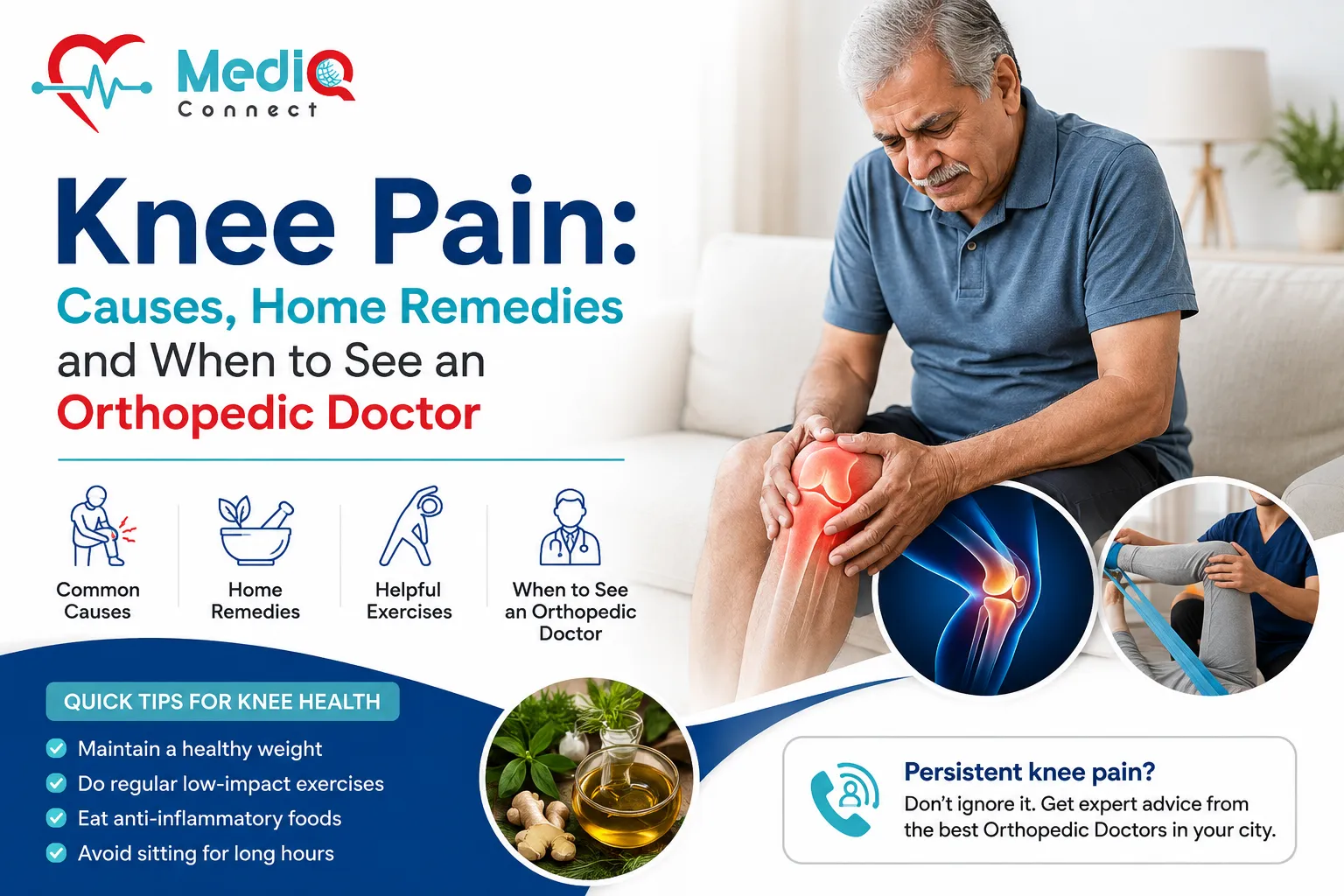



Knee Pain: Causes, Home Remedies and When to See an Orthopedic Doctor
Knee pain is one of the most common reasons people see an orthopedic doctor, affecting everyone from athletes and active adults to older adults managing long-term joint wear. It can start suddenly after an injury or build up gradually over months of overuse, and the right response looks very different depending on which pattern applies to you.
Understanding knee pain causes and treatment starts with recognising that not all knee pain is the same, and the right response depends heavily on how it started, how long it has lasted, and what other symptoms accompany it. Some cases respond well to simple home care, while others need a proper medical evaluation to prevent the problem from getting worse over time.
This guide walks through the most common causes behind knee pain, safe home remedies worth trying first, and the specific warning signs that mean it is time to see an orthopedic doctor rather than waiting it out and hoping the discomfort simply resolves on its own over time.
A Quick Glossary: Terms Worth Knowing
- ACL - Anterior Cruciate Ligament, a key stabilising ligament often injured during sports
- Meniscus - cartilage that cushions the knee joint between the thigh and shin bones
- Patellofemoral pain - discomfort around the kneecap, often from overuse
- Osteoarthritis - gradual wearing down of joint cartilage, common with age
- RICE method - Rest, Ice, Compression, Elevation, a standard first-aid approach for minor injuries
Understanding these terms makes it easier to follow along when your orthopedic doctor explains a diagnosis, rather than feeling lost in unfamiliar terminology.
How Knee Pain Differs by Age Group
Children and Teenagers
Growing children and teenagers, particularly those active in sports, sometimes develop Osgood-Schlatter disease, a condition causing pain below the kneecap linked to growth plate irritation, which typically resolves as growth completes.
Young Adults
Young, active adults more commonly experience overuse injuries like patellofemoral pain or ligament injuries from sports, given higher activity levels and impact on the joint.
Middle-Aged and Older Adults
Osteoarthritis becomes an increasingly common cause of knee pain causes and treatment discussions with age, as cartilage naturally wears down over decades of use.
Common Causes of Knee Pain
There is rarely a single explanation for knee pain. The list below covers the most common causes discussed in knee pain causes and treatment conversations, though only an orthopedic doctor can confirm which applies to your specific situation.
Overuse and Patellofemoral Pain
Repetitive movement, such as running, climbing stairs, or prolonged squatting, can irritate the area around the kneecap, a condition often called patellofemoral pain. This is one of the most common causes among physically active people.
Osteoarthritis
Osteoarthritis, the gradual wearing down of cartilage in the knee joint, is a leading cause of chronic knee pain, particularly in older adults. It typically develops slowly and worsens over time without proper management.
Ligament Injuries
Injuries to the ligaments that stabilise the knee, such as the ACL or MCL, often occur during sports involving sudden direction changes, and can cause pain alongside a feeling of instability or the knee giving way.
Meniscus Tears
The meniscus, a piece of cartilage that cushions the knee joint, can tear from a sudden twisting motion or gradually degrade with age. This often causes pain alongside swelling and occasional locking of the joint.
Tendinitis
Inflammation of the tendons around the knee, often called jumper's knee when it affects the patellar tendon, is common among athletes involved in repetitive jumping or running activities.
Bursitis
Inflammation of the small fluid-filled sacs that cushion the knee joint, often triggered by repetitive kneeling or minor injury, can cause localised swelling and tenderness around the joint.
Excess Body Weight
Carrying extra body weight places additional stress on the knee joints with every step, which can accelerate cartilage wear and worsen existing knee pain over time.
Symptoms That Often Accompany Knee Pain
Knee pain rarely occurs in complete isolation. Paying attention to accompanying symptoms can help your orthopedic doctor narrow down the underlying cause more efficiently.
- Swelling or visible puffiness around the joint
- A feeling of instability or the knee "giving way"
- Clicking, popping, or locking sensations during movement
- Stiffness, particularly after periods of rest
- Warmth or redness around the knee
Any combination of these alongside knee pain is worth mentioning specifically during an orthopedic consultation, since it gives the doctor a fuller, more accurate picture to work from right from the start.
Safe Home Remedies to Try First
For mild to moderate knee pain, especially from minor overuse or a low-impact injury, a few safe home measures are generally a reasonable first step before seeking a formal evaluation.
Rest and Activity Modification
Giving the knee a break from activities that worsen the pain, without becoming completely immobile, allows inflammation to settle and prevents further irritation to the joint.
Ice Therapy
Applying an ice pack wrapped in a cloth for 15 to 20 minutes at a time can help reduce swelling and numb discomfort, particularly useful in the first few days after a minor injury.
Compression and Elevation
A simple elastic bandage can help control swelling, and elevating the leg above heart level while resting supports fluid drainage away from the joint.
Gentle Movement and Stretching
Once acute pain settles, gentle range-of-motion exercises and stretching can help maintain flexibility and prevent stiffness, though these should be introduced gradually and stopped if they increase pain.
Over-the-Counter Pain Relief
Over-the-counter anti-inflammatory medication can help manage pain and swelling for many people, though it is worth checking with a pharmacist or doctor about suitability for your specific health history before regular use.
This combination, sometimes remembered as the RICE method (rest, ice, compression, elevation), forms the foundation of most home-based approaches to knee pain causes and treatment for minor, non-urgent cases.
Ice or Heat: Which Should You Use?
Ice is generally recommended for the first 48 to 72 hours after an acute injury or flare-up, since it helps reduce swelling and numbs pain in the early stages.
Heat is often more useful for chronic stiffness or muscle tightness around the knee, helping to relax tissue and improve blood flow before activity, rather than during an acute, swollen phase.
Using the wrong therapy at the wrong stage does not usually cause harm, but understanding this distinction helps you get more effective relief when self-managing minor pain at home.
The Role of Footwear and Posture
Worn-out or unsupportive footwear can alter how weight is distributed through your legs, placing uneven stress on the knee joints over time, particularly during walking or running.
Posture and gait also play a role. Favouring one leg due to discomfort elsewhere in the body, such as the hip or lower back, can indirectly contribute to knee strain over time.
If you are unsure whether footwear or gait is contributing to your knee pain, a physical therapist or orthopedic doctor can assess your walking pattern and recommend appropriate adjustments.
When Home Remedies Are Not Enough
Home care works well for many minor cases, but certain patterns suggest it is time to move beyond self-management and seek a proper medical evaluation.
- Pain that persists beyond two to three weeks despite home care
- Pain that is getting worse rather than improving
- Swelling that does not go down with rest and ice
- Difficulty putting weight on the affected leg
If home remedies have not made a meaningful difference within a few weeks, continuing to self-manage without a proper diagnosis often delays effective treatment rather than saving time.
When to See an Orthopedic Doctor Immediately
Certain symptoms warrant prompt medical attention rather than a wait-and-see approach, since delaying care in these cases can allow an underlying injury to worsen.
- Visible deformity or the knee appears out of place
- Inability to fully straighten or bend the knee
- The knee buckles, locks, or cannot support your weight
- Fever accompanied by redness and swelling, which may indicate infection
- Severe pain immediately following a significant injury
These red flags are an important part of understanding knee pain causes and treatment accurately, since some situations genuinely require urgent evaluation rather than home management.
How Knee Pain Is Typically Diagnosed
An orthopedic doctor usually starts with a detailed history of when the pain started, what activities trigger it, and any recent injuries, followed by a physical examination assessing range of motion, stability, and swelling.
Depending on the findings, imaging such as an X-ray or MRI may be recommended to get a clearer picture of bone alignment, cartilage condition, or ligament integrity.
The exact combination of tests depends on your symptoms and history, which is why a proper in-person evaluation matters more than trying to self-diagnose based on symptoms alone.
Physical Therapy Exercises Worth Discussing With a Professional
Strengthening the muscles that support the knee, particularly the quadriceps and hamstrings, is one of the most effective long-term strategies for managing and preventing knee pain, though specific exercises should be tailored to your diagnosis.
- Straight leg raises, to build quadriceps strength without stressing the joint
- Wall sits, performed gently and gradually increased over time
- Hamstring stretches, to improve flexibility around the joint
- Low-impact cycling, which builds strength with minimal joint stress
A physical therapist can assess your specific condition and recommend a tailored exercise plan, since the wrong exercise for your particular injury could potentially worsen symptoms rather than help.
A Realistic Recovery Timeline
Minor overuse injuries often improve within one to two weeks with proper rest and home care, while more significant injuries like ligament tears can take several months to fully heal, particularly if surgery is involved.
Osteoarthritis, being a chronic condition, is managed on an ongoing basis rather than "cured" within a specific timeline, with treatment focused on symptom control and slowing further joint damage.
Understanding that recovery timelines vary significantly by cause is an important part of knee pain causes and treatment discussions, since expecting a ligament tear to heal as quickly as minor overuse pain often leads to frustration.
General Treatment Approaches
Treatment for knee pain depends entirely on the underlying cause, which is why a proper diagnosis always comes first. The categories below are for general awareness, not a substitute for a personalised treatment plan.
- Physical therapy, to strengthen surrounding muscles and improve joint stability
- Medication, for managing pain and inflammation under medical guidance
- Bracing or supportive devices, for certain ligament or stability issues
- Injections, such as corticosteroid or lubricant injections, for specific conditions like osteoarthritis
- Surgery, reserved for more severe cases such as significant ligament tears or advanced joint damage
Surgery is generally considered a later option rather than a first response, and most knee pain causes and treatment discussions focus on conservative management before more invasive approaches are considered.
Knee Pain in Athletes vs. Everyday Activity
Athletes often experience knee pain from acute injuries during high-impact sports, while non-athletes more commonly develop pain gradually through overuse, prolonged standing, or age-related joint wear.
Both groups benefit from the same basic principle: addressing the underlying cause rather than only masking the pain, since continuing to push through unaddressed pain often leads to a more serious injury over time.
Preventing Knee Pain Before It Starts
- Maintain a healthy weight to reduce stress on the knee joints
- Warm up properly before exercise and stretch afterward
- Strengthen the muscles around the knee, particularly the quadriceps and hamstrings
- Wear appropriate, supportive footwear for your activity
- Avoid sudden increases in exercise intensity or duration
These habits do not guarantee you will never experience knee pain, but they meaningfully reduce the risk of common overuse injuries.
Returning to Sport or Exercise Safely
Returning to activity too quickly after knee pain, even once it feels significantly better, is one of the most common reasons for recurring injury. A gradual, structured return is generally safer than resuming full intensity immediately.
Follow any specific guidance from your physical therapist or orthopedic doctor regarding when and how to progressively increase activity, rather than relying solely on how the knee feels on any given day.
Pay attention to any pain that returns during this process, since this is often the body's way of signalling that you are progressing faster than the joint is ready for.
Trusting Your Body's Signals
Pain is generally a useful signal rather than something to override completely. Persistent discomfort during a specific movement often means that movement needs modification, not that it should simply be pushed through.
Learning to distinguish between normal post-exercise soreness and pain that indicates a genuine problem takes some practice, but is a valuable skill for managing long-term joint health.
Myths and Facts About Knee Pain
- Myth: Rest alone always fixes knee pain. Fact: Complete rest for too long can sometimes lead to stiffness and muscle weakness, delaying recovery.
- Myth: Knee pain only affects older adults. Fact: Athletes and active young adults commonly experience knee pain from overuse or injury.
- Myth: Cracking or popping sounds always mean something is wrong. Fact: Occasional joint sounds without pain are usually harmless.
- Myth: Surgery is the first treatment option for most knee pain. Fact: Most cases are managed successfully with conservative treatment first.
Comparing MediQConnect to Generic Health Directories
- Verification: MediQConnect confirms credentials and registration before listing a doctor
- Fee transparency: consultation charges are displayed upfront
- Consultation options: both in-clinic and video consultation are available where offered
- Local focus: listings are specific to Rajkot, not a generic nationwide template
This structured approach means patients researching knee pain causes and treatment can move from information-gathering to booking a real consultation without losing trust along the way.
Common Mistakes to Avoid
- Pushing through pain during exercise instead of modifying activity
- Relying on pain medication alone without addressing the underlying cause
- Skipping physical therapy exercises once initial pain improves
- Delaying evaluation for persistent pain out of a hope it will simply pass
- Returning to full activity too quickly after an injury
Avoiding these mistakes generally leads to a faster, more complete recovery and reduces the risk of the same issue recurring later.
Both partners in a household can benefit from this awareness. Knee pain affecting a partner's mobility often changes daily routines for the whole family, so understanding the likely cause together, rather than one person quietly managing it alone, tends to lead to better outcomes and less frustration for everyone involved.
A Note on Bilateral vs. One-Sided Knee Pain
Pain affecting both knees at the same time often points toward a systemic factor, such as osteoarthritis or excess body weight, while pain in just one knee more commonly suggests a localised injury or overuse issue specific to that side.
Mentioning whether your pain is one-sided or affects both knees is a small detail that can meaningfully help your doctor narrow down the likely cause more quickly during your consultation.
A Note on Cold Climates and Seasonal Stiffness
Some people report increased knee stiffness during colder months or seasonal weather changes, though the exact mechanism behind this is not fully understood and likely varies between individuals.
If you notice a seasonal pattern to your knee discomfort, mentioning it to your doctor can still be useful, even if it turns out to be a minor factor alongside other underlying causes.
Hydration and Joint Health
Cartilage relies partly on adequate hydration to maintain its cushioning properties, and general dehydration can indirectly contribute to joint stiffness, though it is rarely a sole cause of significant knee pain on its own.
Maintaining good overall hydration, alongside a balanced diet and regular movement, supports general joint health as part of a broader lifestyle approach rather than serving as a standalone treatment.
Choosing Between Multiple Verified Orthopedic Doctors
It is common to find more than one verified orthopedic doctor with similar experience. In these cases, small details can help you decide - consulting language, sub-specialisation in sports injuries versus joint replacement, or simply which time slots line up with your schedule.
There is no single "correct" choice in these situations. What matters is that every option in front of you has already cleared the same verification bar, so the decision comes down to genuine preference rather than guessing which listing can actually be trusted.
Long-Term Monitoring for Chronic Conditions
For conditions like osteoarthritis that develop gradually and persist long-term, ongoing monitoring through periodic check-ups helps track how the joint is changing over time and whether treatment adjustments are needed.
This is particularly relevant as symptoms can shift gradually, making it easy to underestimate how much a condition has progressed without a doctor's objective assessment at regular intervals.
Supporting a Family Member With Knee Pain
If a parent or family member is dealing with ongoing knee pain, encouraging them to see an orthopedic doctor rather than dismissing it as a normal part of aging can make a genuine difference to their quality of life.
Offering practical help, such as accompanying them to an appointment or helping research verified specialists, often removes the biggest barrier: simply getting started with a proper evaluation.
Making the Platform Easy to Use for Every Patient
A verification-first platform is only genuinely useful if booking is also simple, particularly for patients dealing with pain and limited mobility. MediQConnect's search and booking flow is designed to be straightforward.
Family members can also book on behalf of an elderly parent or relative managing chronic knee pain, which can reduce the friction that sometimes delays a first orthopedic visit.
A Final Word on Listening to Persistent Pain
It can be tempting to normalise ongoing knee pain, especially if it has become a familiar part of daily life. But persistent pain, even mild, is worth a proper evaluation rather than quiet acceptance.
Addressing the underlying cause, whatever it turns out to be, generally leads to better long-term mobility than managing symptoms indefinitely without ever understanding what is actually happening in the joint.
Bringing It All Together
Knee pain covers a wide spectrum, from a minor ache after an active weekend to a significant injury needing surgical repair. Matching your response to the actual severity and pattern of your symptoms is what genuinely helps.
Home remedies serve minor, short-term discomfort well, while persistent, worsening, or red-flag symptoms call for a proper orthopedic evaluation rather than continued self-management.
How MediQConnect Helps You Find the Right Orthopedic Doctor
Finding a qualified orthopedic doctor should not add stress to an already uncomfortable situation. MediQConnect lists verified orthopedic specialists across Rajkot, with clear registration details, experience, and consultation fees displayed upfront.
Our detailed guide on the best orthopedic doctors in Rajkot covers what to look for before booking, and you can choose between an in-clinic visit or a video consultation depending on your needs.
Every listed doctor goes through a verification process before appearing in search results, so when addressing something as important as knee pain causes and treatment, you can feel confident about who you are actually consulting.
Sleep Position and Nighttime Knee Pain
Some people notice knee pain worsens at night or disrupts sleep, particularly with conditions like osteoarthritis. Sleeping with a pillow between or under the knees can help maintain better alignment and reduce discomfort.
If nighttime pain is significantly disrupting your sleep, mention this specifically to your doctor, since it may indicate a need for adjusted treatment rather than something to simply tolerate indefinitely.
Supplements and Knee Braces: What the Evidence Suggests
Some people use supplements like glucosamine or chondroitin for joint support, though evidence on their effectiveness is mixed, and results vary considerably between individuals.
Knee braces can provide additional support and stability, particularly during activity or recovery from certain injuries, but the right type of brace depends entirely on your specific diagnosis rather than a generic, one-size-fits-all choice.
Discuss both supplements and bracing options with your doctor before relying on them, since neither should replace a proper diagnosis or prescribed treatment plan specific to your condition.
Real-World Scenarios: How People Approach Knee Pain
Scenario 1: A Runner With New Knee Pain
A recreational runner notices knee pain after increasing weekly mileage too quickly. Rest, ice, and a gradual return to training resolve the issue, though a physical therapist helps identify a strength imbalance to prevent recurrence.
Scenario 2: An Older Adult With Gradual Knee Pain
An older adult notices gradually worsening knee pain over several months, without any specific injury. An orthopedic evaluation confirms early osteoarthritis, and a combination of physical therapy and weight management helps manage symptoms.
Scenario 3: A Sudden Injury During Sport
Someone twists their knee during a football match and experiences immediate swelling and instability. Prompt evaluation confirms a ligament injury, requiring a structured recovery plan rather than home remedies alone.
Each of these scenarios reflects a different pattern within the broader topic of knee pain causes and treatment, illustrating why a one-size-fits-all approach rarely works.
A Quick Checklist Before Your Appointment
- Note when the pain started and what activity, if any, triggered it
- Track which movements make the pain better or worse
- Note any swelling, clicking, or instability you have noticed
- List any home remedies already tried and how much they helped
- Prepare two or three specific questions you want answered
When to Consider a Second Opinion
If a recommended treatment does not seem to be helping, or a suggested surgery feels premature, seeking a second opinion from another verified orthopedic doctor is a reasonable and common step.
Bring your existing imaging and test results to the second consultation so the new doctor can review your case efficiently rather than starting the diagnostic process from scratch.
Data Privacy When Discussing Your Symptoms Online
Booking a consultation or storing medical records digitally involves sharing personal health information, so it is reasonable to want clarity on how a platform handles this data.
MediQConnect outlines its approach in its published privacy policy and terms and conditions. Reviewing these briefly before your first booking is a sensible habit.
How MediQConnect Approaches Medical Content Accuracy
This guide, and others across the MediQConnect blog, are written to reflect general, well-established medical information intended for education and awareness, not to replace a professional diagnosis.
Content covering topics like knee pain causes and treatment is reviewed for accuracy against general medical consensus, and we consistently direct readers toward a qualified orthopedic doctor for anything specific to their individual health.
In-Clinic vs. Video Consultation for Knee Pain
An initial video consultation can be a reasonable first step to discuss your symptoms and history, especially for mild cases or follow-up conversations after imaging has already been done.
A physical examination, however, will require an in-clinic visit, since assessing range of motion, stability, and swelling directly is an important part of an accurate diagnosis that cannot be replicated over video.
Occupational Risks for Knee Pain
Jobs involving prolonged standing, repetitive kneeling, or frequent stair climbing carry a higher risk of developing knee pain over time, even without a specific injury triggering it.
If your work involves these activities, simple adjustments like supportive footwear, kneeling pads, or scheduled breaks to change position can help reduce cumulative strain on the joint.
Discuss occupational factors with your doctor if you suspect they are contributing to your knee pain, since workplace modifications are sometimes a meaningful part of a broader treatment plan.
Weight Management and Long-Term Joint Health
Every extra kilogram of body weight adds multiple kilograms of additional force through the knee joint with each step, which compounds significantly over the course of daily activity.
Gradual, sustainable weight management, guided by a doctor or dietitian rather than a restrictive short-term approach, can meaningfully reduce joint stress and slow the progression of conditions like osteoarthritis over time.
This is not about achieving a specific number, but about reducing unnecessary load on a joint that is already dealing with pain or early wear, discussed as part of a broader treatment plan with your doctor.
What to Expect at Your First Orthopedic Consultation
Be prepared to describe when your pain started, what activities make it better or worse, and any previous injuries to the same knee, since these details help your doctor narrow down the likely cause more efficiently.
Bring any previous imaging or test results if you have them, and be ready to demonstrate the movements that trigger your pain during the physical examination.
Do not hesitate to ask questions about your diagnosis and treatment options. A thorough conversation leads to a more accurate understanding of your specific situation.
People Also Ask
What are the most common causes of knee pain?
Common causes include overuse or patellofemoral pain, osteoarthritis, ligament injuries, meniscus tears, tendinitis, and excess body weight placing stress on the joint.
What home remedies help with knee pain?
Rest, ice, compression, elevation, gentle stretching, and over-the-counter anti-inflammatory medication are commonly used home remedies for mild to moderate knee pain.
When should I see a doctor for knee pain?
See a doctor if pain persists beyond two to three weeks, worsens despite home care, involves visible deformity, or if you cannot bear weight on the affected leg.
Can knee pain go away on its own?
Mild knee pain from minor overuse often improves with rest and home care. Persistent or worsening pain typically requires a proper medical evaluation.
Is walking good or bad for knee pain?
This depends on the cause. Gentle walking is often beneficial for general joint health, but high-impact activity should be avoided until an underlying injury is properly evaluated.
Does knee pain always require surgery?
No. Most knee pain is managed successfully with conservative treatment like physical therapy and medication. Surgery is generally reserved for more severe or unresponsive cases.
Can weight loss help reduce knee pain?
Yes, for many people. Reducing excess body weight lessens the force placed on the knee joint with each step, which can meaningfully ease pain and slow conditions like osteoarthritis.
Is it safe to exercise with knee pain?
It depends on the cause. Low-impact activity is often fine or even beneficial, but high-impact exercise should generally be avoided until the underlying cause is properly evaluated.
What does a clicking sound in the knee mean?
Occasional clicking without pain is usually harmless. Clicking accompanied by pain, swelling, or a catching sensation is worth mentioning to a doctor.
Can knee pain be a sign of something serious?
In most cases, no, but red flags like deformity, inability to bear weight, or fever with swelling can indicate a more serious issue requiring prompt medical attention.
Final Thoughts
Knee pain is common, but that does not mean it should be ignored, especially when home remedies are not helping or warning signs appear. Understanding knee pain causes and treatment gives you the context to know when self-care is enough and when professional evaluation is genuinely necessary.
If your knee pain has persisted or worsened, consider booking a consultation with a verified orthopedic doctor in Rajkot through MediQConnect for a proper diagnosis and treatment plan.
Note: This article is written for general education and awareness. It is not a substitute for medical diagnosis or treatment. If you are experiencing persistent or severe knee pain, please consult a qualified orthopedic doctor for advice specific to your situation.