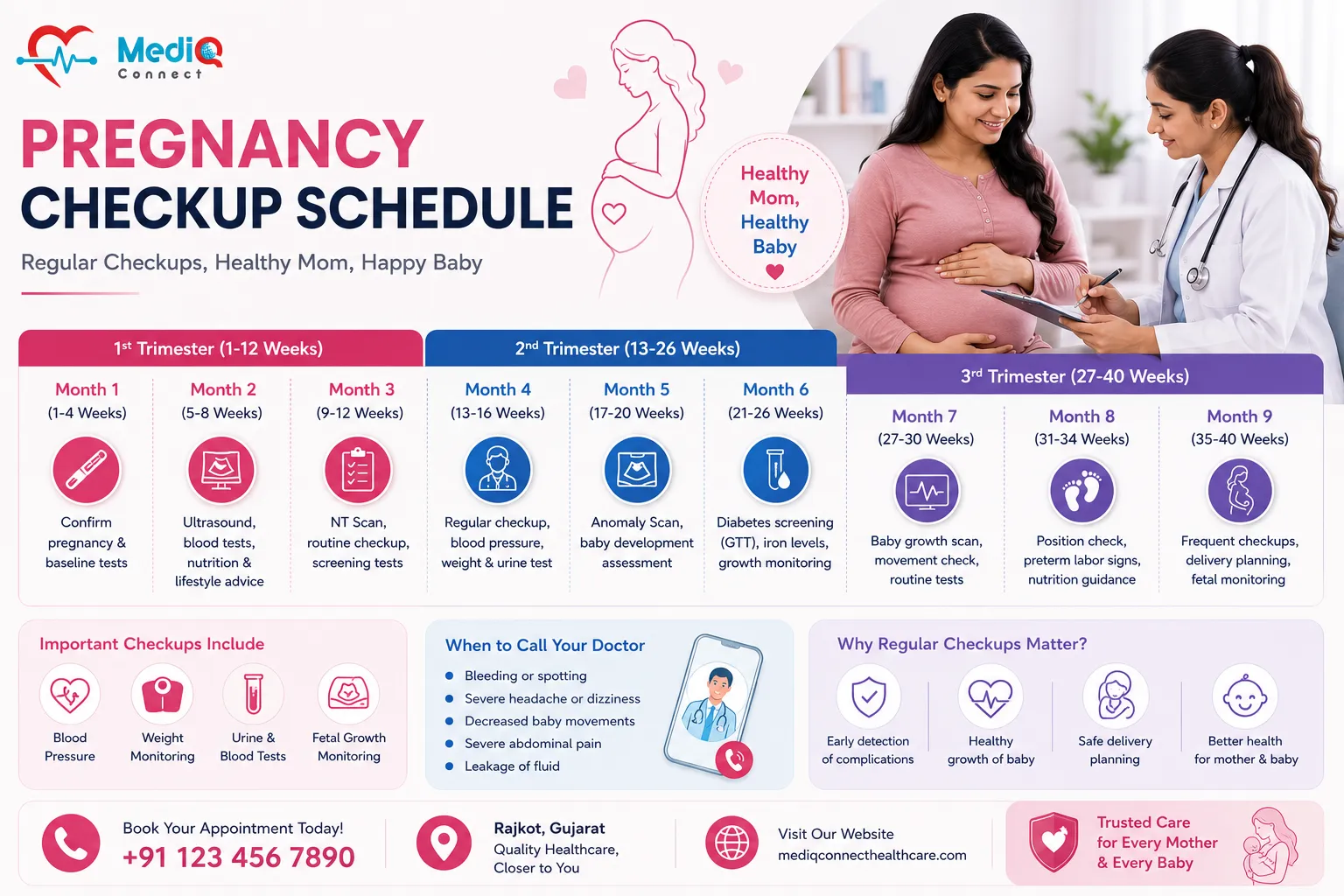



Pregnancy Checkup Schedule: Month-by-Month Guide for Expecting Mothers
Finding out you are pregnant brings excitement, questions, and often a fair amount of uncertainty about what comes next. One of the first things most expecting mothers want clarity on is simple: how often will I actually need to see a doctor, and what will each visit actually involve?
A clear pregnancy checkup schedule removes a lot of that early uncertainty. Knowing roughly when each visit and test is expected helps you plan ahead, prepare questions, and feel more in control of a nine-month journey that can otherwise feel unpredictable.
This guide walks through a typical pregnancy checkup schedule month by month, covering what usually happens at each stage, which tests to expect, and when to see your gynecologist sooner than scheduled, so you can approach each trimester with a clearer sense of what lies ahead.
Why a Pregnancy Checkup Schedule Matters
Regular prenatal visits are one of the most effective ways to catch potential complications early, monitor your baby's growth, and address symptoms before they become bigger concerns.
Following a consistent pregnancy checkup schedule also builds a complete record over time, which helps your doctor spot subtle changes, such as a gradual rise in blood pressure, that a single isolated visit might miss.
While every pregnancy is different, having a general framework in mind makes it much easier to understand why your doctor is recommending a particular visit or test at a particular stage.
General Pregnancy Checkup Schedule: The Overview
Most gynecologists follow a broadly similar pregnancy checkup schedule for low-risk pregnancies, adjusting frequency as the due date approaches.
- Weeks 4 to 28 - one visit approximately every four weeks
- Weeks 28 to 36 - one visit approximately every two weeks
- Week 36 to delivery - weekly visits
This is a general framework, not a fixed rule. Your doctor may adjust your specific pregnancy checkup schedule based on your age, medical history, or any complications that arise along the way.
Month 1: Confirming Pregnancy
Most women confirm pregnancy through a home test around the time of a missed period, roughly four weeks into pregnancy, counting from the first day of the last menstrual period.
This early stage is usually more about confirmation than clinical visits. Many gynecologists recommend scheduling your first proper appointment slightly later, once there is more to assess during an examination.
Month 2: The First Prenatal Visit
The first formal appointment typically happens between weeks 8 and 10. This visit is usually longer than later ones, since it involves a detailed health history review.
Expect a physical examination, blood tests to check overall health and blood group, and often an early ultrasound to confirm the pregnancy, estimate the due date, and check for a heartbeat.
Month 3: Completing the First Trimester
By weeks 11 to 13, this stage typically includes a nuchal translucency scan, which screens for certain chromosomal conditions alongside blood tests, often called first trimester combined screening.
Your doctor will also continue monitoring your general health, weight, and blood pressure, and this is a good time to discuss any early pregnancy symptoms like nausea or fatigue that are troubling you.
Month 4: Entering the Second Trimester
Many women find the second trimester more comfortable, as early symptoms like nausea often ease. Visits during this period typically continue at roughly one every four weeks.
Routine checks at this stage include blood pressure, weight, urine testing, and measuring fundal height, which helps track your baby's growth as the pregnancy progresses.
Month 5: The Anomaly Scan
Between weeks 18 and 22, this stage typically includes a detailed anomaly scan, sometimes called a level 2 ultrasound. This scan examines your baby's organs, spine, and overall development in detail.
This is often the appointment where parents can find out the baby's sex, if they choose to. It is also an important screening step, so your doctor will review the findings with you carefully.
Month 6: Monitoring Continues
Routine visits continue on the standard four-week interval through most of the second trimester. Your doctor will keep tracking growth, movement, and any emerging symptoms.
This is a good stage to start discussing your birth preferences, ask about prenatal classes, and raise any questions about what to expect as you move into the third trimester.
Month 7: The Gestational Diabetes Screening
Between weeks 24 and 28, this stage typically includes a screening for gestational diabetes, involving a glucose tolerance test. This is a standard, routine part of prenatal care, not a sign that something is wrong.
Visits often shift to every two weeks around this point, marking the transition into the third trimester and a somewhat closer monitoring pattern.
Month 8: Closer Monitoring Begins
From around week 28 onward, visits typically move to every two weeks. They focus on tracking your baby's position, growth, movement patterns, and your own blood pressure and weight.
Your doctor may also discuss birth planning in more detail during this stage, including what to expect during labor and when to head to the hospital.
Month 9: The Final Stretch
From week 36 until delivery, most plans move to weekly visits. Your doctor will check your cervix, monitor your baby's position, and screen for Group B Streptococcus, a routine test done around this stage.
These frequent visits allow your doctor to catch any late-stage changes quickly and ensure both you and your baby remain healthy as you approach your due date.
Postpartum: The Visit After Delivery
Prenatal care does not end at delivery. Most doctors recommend a postpartum check-up within the first few weeks after birth to assess physical recovery, discuss contraception if relevant, and address any emotional or mental health concerns.
This visit is just as important as any prenatal appointment, yet it is sometimes overlooked amid the demands of caring for a newborn. Prioritising it supports both your recovery and long-term health.
A Quick Glossary: Terms You'll See on Your Schedule
- Gestational age - how far along the pregnancy is, counted from the first day of the last menstrual period
- Fundal height - the measurement from the pubic bone to the top of the uterus, used to track growth
- Nuchal translucency (NT) scan - an early ultrasound measuring fluid at the back of the baby's neck, part of chromosomal screening
- Anomaly scan - a detailed mid-pregnancy ultrasound examining organ development
- Group B Strep (GBS) - a common bacteria screened for late in pregnancy, relevant to delivery planning
Knowing these terms in advance makes each appointment easier to follow, since your doctor will often reference them without necessarily explaining them in full detail during a routine visit.
Choosing the Right Gynecologist for Your Pregnancy
Since you will likely see the same doctor repeatedly over nine months, choosing someone you feel comfortable with matters as much as their qualifications. Look for clear communication, willingness to answer questions, and a consultation style that suits your preferences.
Checking registration details, hospital affiliation, and experience with pregnancies similar to yours, particularly if you have any known risk factors, is a sensible first step before committing to one doctor for the full duration of your care.
If you are not comfortable with your first choice after an initial visit, switching to another verified doctor early on is entirely reasonable and often easier than waiting until later in the pregnancy.
Key Tests Explained
A typical pregnancy checkup schedule involves several distinct tests, and understanding what each one checks can make appointments feel less overwhelming.
- Dating scan (8–14 weeks) - confirms the pregnancy and estimates the due date
- Nuchal translucency / first trimester screening (11–13 weeks) - screens for chromosomal conditions
- Anomaly scan (18–22 weeks) - examines organ development in detail
- Glucose tolerance test (24–28 weeks) - screens for gestational diabetes
- Group B Streptococcus test (around 36 weeks) - checks for a common bacteria relevant to delivery planning
Your doctor will confirm exactly which tests apply to your specific pregnancy checkup schedule, since some are optional or adjusted based on individual risk factors.
General Nutrition and Lifestyle Guidance
Your doctor will typically discuss nutrition, activity levels, and general lifestyle habits at various points throughout your prenatal visits, tailored to your specific health and stage of pregnancy.
Rather than following generic advice found online, it is best to discuss specific dietary needs, safe exercise levels, and any supplements with your gynecologist directly, since these recommendations can vary based on individual health factors.
Certain foods and habits are generally advised against during pregnancy, and your doctor will cover these specifics during your visits based on current medical guidance rather than a one-size-fits-all list.
Mental Health During Pregnancy
Emotional changes during pregnancy are common and expected, given the significant hormonal shifts involved. Feeling anxious, overwhelmed, or emotional at times does not mean something is wrong.
That said, persistent low mood, severe anxiety, or feelings that interfere with daily functioning are worth discussing openly with your doctor. Many prenatal visits include a brief check-in about emotional wellbeing for exactly this reason.
Mentioning how you are feeling emotionally, not just physically, ensures your care team can offer appropriate support or referrals if needed, rather than only focusing on physical symptoms.
Involving Your Partner in Prenatal Visits
Many expecting parents find it helpful for a partner or support person to attend appointments, particularly key milestones like ultrasounds or discussions about birth planning.
A partner can help remember details discussed during the visit, ask questions you might not think of in the moment, and provide emotional support throughout what can be a long and sometimes overwhelming process.
If in-person attendance is not possible due to work or distance, some video consultations allow a partner to join remotely, which can be a practical alternative for at least some appointments.
Common Symptoms by Trimester
First Trimester Symptoms
Nausea, fatigue, breast tenderness, and frequent urination are common in the early weeks. Most are considered normal, though severe or persistent vomiting is worth flagging to your doctor rather than assuming it will simply pass.
Second Trimester Symptoms
Many women feel more energetic during this stage. Round ligament pain, mild swelling, and the first noticeable baby movements, often called quickening, are common and typically expected.
Third Trimester Symptoms
Backaches, shortness of breath, and trouble sleeping become more common as the due date approaches. Braxton Hicks contractions, mild and irregular practice contractions, are also common and usually harmless.
Discussing which symptoms are expected versus which ones need attention is a normal part of every visit, so do not hesitate to bring up anything that feels different or concerning, even if it seems minor.
What Happens at a Typical Prenatal Visit
While each stage of pregnancy has its own focus, most routine visits share a similar structure.
- Checking blood pressure and weight
- Urine testing for protein or sugar
- Measuring fundal height to track growth
- Listening to your baby's heartbeat
- Discussing any symptoms or concerns you have
Knowing this general structure in advance helps you prepare questions and make the most of each appointment, rather than feeling like each visit is unpredictable.
How the Schedule Differs for Twin or Multiple Pregnancies
Carrying twins or more typically means more frequent monitoring than a single pregnancy, since the risk of certain complications is higher and there is more to track during each visit.
Additional ultrasounds are common throughout a multiple pregnancy to monitor each baby's individual growth, and your doctor may recommend earlier or more frequent glucose and blood pressure screening as a precaution.
If you are expecting twins or more, ask your doctor directly how your visit frequency and testing will differ from a standard single-pregnancy timeline, since the adjustments can vary depending on the specifics of your pregnancy.
Video Consultations During Pregnancy
Not every prenatal visit requires an in-person exam. Follow-up discussions, reviewing test results, or addressing non-urgent questions can often be handled over video, saving time particularly during a busy work schedule or later in pregnancy when travel becomes less comfortable.
Physical examinations, ultrasounds, and certain routine checks like blood pressure will still require an in-clinic visit, but knowing which appointments can be done remotely helps you plan your time more effectively across the full nine months.
MediQConnect lists which gynecologists offer video consultation alongside in-clinic visits, so you can choose the right format for each stage of your prenatal care.
What to Do If You Miss an Appointment
Life happens, and occasionally missing a scheduled visit is not usually cause for panic. Contact your doctor's office as soon as possible to reschedule, ideally within a few days, rather than waiting until your next planned appointment.
Certain time-sensitive tests, such as the first trimester screening or the glucose tolerance test, do have specific windows in which they are most useful, so rescheduling promptly matters more for those particular visits than for a routine check-in.
Understanding Consultation and Test Costs
Prenatal care involves a combination of consultation fees and separate charges for tests like ultrasounds and blood work. MediQConnect displays consultation charges upfront on each doctor's profile, so you can plan ahead rather than being surprised at billing.
If you have health insurance, confirm in advance which prenatal visits and tests are covered under your specific policy, since maternity coverage varies significantly between insurers and plan types.
Data Privacy During Prenatal Care
Pregnancy involves a significant amount of personal health information, so it is reasonable to want clarity on how a platform stores and uses this data before booking consultations or keeping digital records.
MediQConnect outlines its approach in its published privacy policy and terms and conditions. Reviewing these briefly before your first booking is a sensible habit, particularly given how much personal health data prenatal care generates.
Comparing MediQConnect to Generic Health Directories
- Verification: MediQConnect confirms credentials and registration before listing a gynecologist
- Fee transparency: consultation charges are displayed upfront
- Consultation options: both in-clinic and video consultation are available where offered
- Local focus: listings are specific to Rajkot, not a generic nationwide template
This structured approach means expecting mothers can move from researching general guidance to booking a real consultation without losing trust along the way, which matters over nine months of ongoing care.
How High-Risk Pregnancies Change the Schedule
Certain factors - such as maternal age, pre-existing health conditions, multiple pregnancies (twins or more), or complications discovered during earlier visits - can lead your doctor to recommend a more frequent pregnancy checkup schedule than the general framework outlined above.
This might mean additional ultrasounds, more frequent blood pressure checks, or specialist consultations alongside your regular gynecologist. None of this should cause alarm; it reflects a more cautious, closely monitored approach rather than an indication that something is necessarily wrong.
If your doctor recommends a schedule that differs from general guidance, it is worth asking directly why, so you understand the reasoning behind it.
When to See Your Doctor Sooner Than Scheduled
Beyond your regular pregnancy checkup schedule, certain symptoms warrant an earlier visit or immediate medical attention, rather than waiting for your next planned appointment.
- Heavy bleeding or severe abdominal pain
- Severe headaches, vision changes, or sudden swelling
- A noticeable decrease in your baby's movements
- Fluid leaking or signs of possible labor before your due date
- Fever or symptoms of infection
If you experience any of these, contact your doctor immediately rather than waiting for your next scheduled visit. These symptoms fall outside the normal rhythm of a routine pregnancy checkup schedule and deserve prompt attention.
Myths and Facts About Prenatal Visits
- Myth: You only need to see a doctor if something feels wrong. Fact: Routine visits catch many issues before symptoms even appear.
- Myth: Every pregnancy is monitored on exactly the same timeline. Fact: Schedules are adjusted based on individual health history and risk factors.
- Myth: Ultrasounds are only for checking the baby's sex. Fact: Scans primarily monitor growth, development, and detect potential complications early.
- Myth: Skipping a visit occasionally does not matter. Fact: Consistency in your pregnancy checkup schedule helps your doctor track subtle changes over time.
How MediQConnect Helps You Stay on Schedule
Keeping up with a pregnancy checkup schedule is much easier with a platform that makes booking simple and keeps your appointment history organised in one place. MediQConnect lists verified gynecologists across Rajkot, with clear registration details, experience, and consultation fees displayed upfront.
Our detailed guide on the best gynecologist in Rajkot covers what to look for before booking your prenatal care with a specific doctor, and you can choose between in-clinic visits and video consultations depending on what each stage of your pregnancy checkup schedule requires.
Every listed doctor goes through a verification process before appearing in search results, which matters considerably for something as important as consistent prenatal care throughout your pregnancy.
Discussing Your Birth Plan
Sometime during the third trimester, your doctor will typically discuss your preferences for labor and delivery, including pain management options, who you want present, and any specific requests you have.
A birth plan is a helpful communication tool, not a rigid contract, since labor does not always go exactly as anticipated. Discussing it in advance still ensures your care team understands your general preferences going in.
This is also a good time to ask about your specific hospital or clinic's policies, such as visitor guidelines and what to expect immediately after delivery.
Packing for the Hospital: A Basic Checklist
- Identification documents and any hospital pre-registration paperwork
- Comfortable clothing for you and going-home outfits for the baby
- Toiletries and any personal comfort items
- Phone charger and entertainment for a potentially long stay
- A copy of your birth plan and any relevant medical records
Packing this bag around week 36, when visits typically become weekly, is a practical way to feel prepared as your due date approaches.
How MediQConnect Approaches Medical Content Accuracy
This guide, and others across the MediQConnect blog, are written to reflect general, well-established prenatal care guidance intended for education and awareness, not to replace a professional care plan.
Content covering pregnancy timelines is reviewed for accuracy against general medical consensus, and we consistently direct readers toward a qualified gynecologist for anything specific to their individual pregnancy, since guidance found online can never replace an actual examination.
Preparing for Each Appointment
A little preparation makes every prenatal visit more productive. Keep a running list of symptoms, questions, or concerns between appointments, since it is easy to forget details in the moment.
- Note any new or worsening symptoms since your last visit
- Bring a list of current medications or supplements
- Write down specific questions you want answered
- Bring your previous test results or reports if visiting a new doctor
This small habit ensures nothing important gets forgotten in the moment and helps you make the most of each appointment.
Bringing It All Together
A pregnancy checkup schedule is ultimately a tool for peace of mind as much as it is a medical framework. Knowing roughly what to expect each month makes the process feel manageable, even during a stage of life filled with so many unknowns.
Pair that general understanding with a doctor you trust, and the nine months ahead become far less daunting, one appointment at a time.
A Final Word on Flexibility
While it helps to know what to generally expect, pregnancy rarely follows a plan exactly. Some visits may be added, some tests may be repeated, and timing may shift based on how things develop, and all of that is a normal part of good, attentive care.
Trusting your doctor's judgment when they recommend deviating from the general framework, while still feeling comfortable asking why, strikes the right balance between staying informed and letting your care team do their job well.
When Your Due Date Passes
It is common for pregnancies to extend slightly beyond the estimated due date, since that date is an estimate rather than a guarantee. Doctors typically continue weekly monitoring and may discuss induction options if the pregnancy extends significantly past 40 weeks.
This extra monitoring is a routine precaution, not necessarily a sign of concern. Your doctor will explain the specific reasoning behind any recommendations made during this stage based on your individual circumstances.
Staying Organised Across Nine Months
Between appointments, tests, and results, it is easy for details to get scattered across different notebooks, apps, or memory alone. Keeping everything in one place, whether a physical folder or a digital app, makes each new appointment easier to prepare for.
MediQConnect keeps your appointment history and visit notes accessible in one account, which is particularly useful over nine months of regular care, especially if you see more than one specialist along the way.
A Note for First-Time Mothers
If this is your first pregnancy, it is completely normal to feel unsure about what counts as a "normal" symptom versus something worth flagging. There is no such thing as an unnecessary question during a prenatal visit.
Experienced mothers often say that the first few appointments are the most reassuring, simply because they establish a baseline and a relationship with a doctor who will guide you through the rest of the process.
Give yourself permission to ask about anything, no matter how small it seems. Your care team has heard every question before, and there is no such thing as being overly cautious when it comes to your health and your baby's.
Keeping a Personal Pregnancy Journal
Some expecting mothers find it helpful to keep a simple journal alongside their appointments, noting symptoms, questions, and milestones as they happen. This can make each visit more focused and serves as a meaningful record afterward.
Even brief notes, jotted down between appointments, often surface details worth mentioning to your doctor that might otherwise be forgotten by the time the next visit arrives.
Planning Around Work and Leave
Many expecting mothers find it helpful to plan maternity leave timing around key milestones, such as the third trimester's more frequent visits, rather than leaving it until the last minute.
Discussing your work situation with your doctor, particularly if your job involves physical strain or long hours, can help them advise on timing for reduced activity or leave, if relevant to your specific health.
Keeping your employer informed early, where possible, also gives you more flexibility to attend appointments without added stress, particularly once visits become more frequent later in pregnancy.
Building Confidence Through Consistent Care
Nine months is a long time, and it is normal for anxiety or uncertainty to resurface at different points, even with a clear schedule in place. Consistent visits with one trusted doctor generally help manage this uncertainty better than sporadic, disconnected care.
Each appointment is an opportunity to ask questions, however small they may seem, and to build a working relationship with your care team that supports you through delivery and beyond.
Postpartum Mental Health Awareness
Mood changes after delivery are common, often described as the "baby blues," and typically ease within the first couple of weeks. Persistent sadness, severe anxiety, or difficulty bonding that lasts longer than this deserves prompt attention.
Your postpartum check-up is a good opportunity to discuss how you are feeling emotionally, not just physically. Many doctors screen for this directly during the visit, so being honest about your mood helps them offer appropriate support.
If concerning symptoms appear before your scheduled postpartum visit, do not wait. Contact your doctor sooner, since emotional wellbeing after delivery is just as important as physical recovery.
When to Consider a Second Opinion
If a recommended test or approach does not feel right, or if you have concerns about how your pregnancy is being managed, seeking a second opinion from another verified gynecologist is a reasonable and common step.
When seeking a second opinion, bring your existing test results and visit history so the second doctor can review your case efficiently rather than starting from scratch.
How MediQConnect Verifies Its Gynecologists
Every gynecologist listed on MediQConnect goes through a defined onboarding process before appearing in search results, confirming their degree, state medical council registration, current practice location, and specialisation.
This matters considerably for prenatal care, since you will likely rely on the same doctor consistently over nine months, making it essential to know from the outset that their credentials have been properly verified.
People Also Ask
How often should I see a doctor during pregnancy?
Generally, every four weeks until 28 weeks, every two weeks from 28 to 36 weeks, and weekly from 36 weeks until delivery, though your doctor may adjust this based on your specific pregnancy checkup schedule.
When is the first prenatal visit usually scheduled?
Most gynecologists recommend the first formal prenatal visit between weeks 8 and 10, though some schedule it slightly earlier if there are specific concerns.
What tests are done at each pregnancy checkup?
Routine visits typically include blood pressure and weight checks, urine testing, fundal height measurement, and listening to the baby's heartbeat, alongside specific tests at certain milestones like the anomaly scan or glucose screening.
Does the checkup schedule change for high-risk pregnancies?
Yes. High-risk pregnancies often involve more frequent visits, additional monitoring, or specialist consultations, based on individual health factors identified by your doctor.
What symptoms mean I should see my doctor before my next scheduled visit?
Heavy bleeding, severe pain, reduced baby movement, sudden swelling, vision changes, or signs of possible labor before your due date should prompt an immediate call to your doctor.
Is a postpartum checkup necessary after delivery?
Yes. A postpartum visit, usually within a few weeks after delivery, checks your physical recovery and addresses any emotional or health concerns, and is an important final step in your overall pregnancy checkup schedule.
Can I switch gynecologists partway through my pregnancy?
Yes. While continuity of care is helpful, switching to another verified doctor is possible at any stage. Bring your existing records to help the new doctor get up to speed quickly.
Are all prenatal visits covered by insurance?
Coverage varies by insurer and policy. It is best to confirm which specific visits and tests are covered under your plan before your appointments begin.
What if my pregnancy is considered high-risk?
High-risk pregnancies typically involve more frequent visits and additional monitoring or specialist consultations, tailored to the specific risk factors identified by your doctor.
Can video consultations replace all prenatal visits?
No. Physical examinations and ultrasounds require in-person visits, but follow-ups and non-urgent discussions can often be handled over video, depending on your doctor's offerings.
Final Thoughts
Understanding a general pregnancy checkup schedule helps take away some of the uncertainty that comes with expecting a baby, even though your doctor will always tailor the exact plan to your individual needs.
If you are pregnant or planning to be, consider booking a consultation with a verified gynecologist in Rajkot through MediQConnect to establish a personalised pregnancy checkup schedule suited to your specific health and history.
Note: This article outlines a general pregnancy checkup schedule based on standard prenatal care guidance. Your actual schedule may differ based on your health history and risk factors. Always follow the specific plan recommended by your own gynecologist.