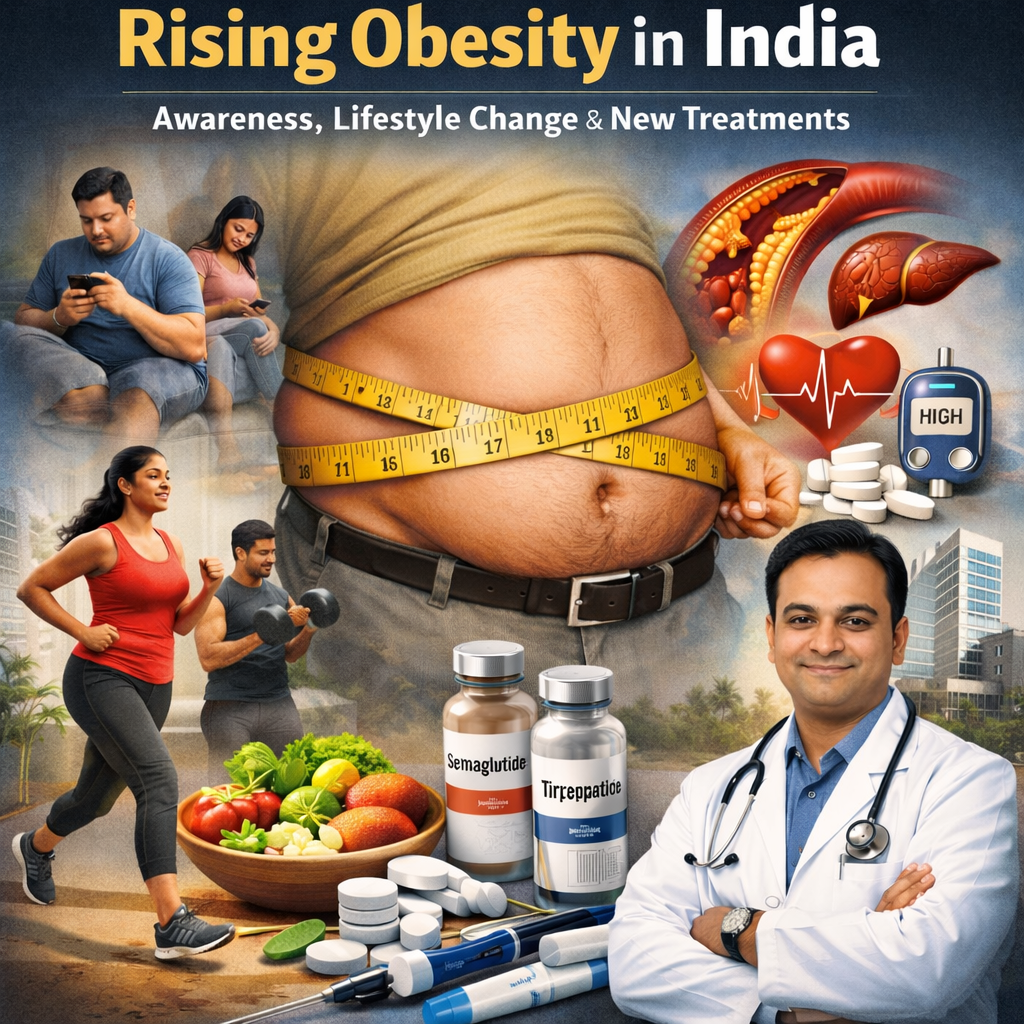



Rising Obesity in India: Awareness, Lifestyle Change and New Treatment Options By Dr. Zenith Sinojiya, DNB (General Medicine), Critical Care Specialist
Obesity is rapidly emerging as one of the most serious public health challenges in India. With increasing urbanization, sedentary lifestyles, easy transport, stress, and easy access to calorie-dense foods, the number of overweight and obese individuals is rising sharply across all age groups in both men and women. Unfortunately, many people still consider obesity merely a cosmetic concern, whereas in reality it is a chronic medical condition that requires proper evaluation and treatment.
Central obesity — the accumulation of fat around the abdomen — is particularly dangerous. An increase in waist size of ≥90 cm (~35 inch) in men and ≥80 cm (~31.5 inch) in women is considered high risk. This abdominal fat is strongly linked to Metabolic Syndrome, a cluster of conditions including high blood pressure, high blood sugar and abnormal cholesterol levels. These factors significantly increase the risk of Type 2 Diabetes, heart disease, Nonalcoholic Fatty Liver Disease, Obstructive Sleep Apnea, joint problems, depression and even certain cancers.
Indians are also known to be more prone to metabolic complications even at relatively lower BMI levels compared with Western populations. Abdominal fat accumulation in both men and women significantly contributes to rising rates of cancers, cardiovascular diseases such as heart attacks, and brain vascular events like strokes in our population.
The first line of treatment for obesity remains lifestyle modification. A structured program involving balanced nutrition, calorie control, regular physical activity, adequate sleep and stress management can produce meaningful weight reduction. However, despite sincere efforts, many patients struggle to achieve sustainable weight loss due to hormonal and metabolic factors.
In such situations, modern medical science now offers effective treatment options through newer medications such as Semaglutide and Tirzepatide. These medicines help regulate appetite, slow gastric emptying and improve metabolic control, assisting patients in achieving significant and sustained weight reduction.
These medications are generally recommended for individuals with BMI ≥30 kg/m², or BMI ≥27 kg/m² with obesity-related conditions such as diabetes, hypertension, dyslipidemia, obstructive sleep apnoea, cardiovascular disease and prediabetes. Common side effects include nausea, reduced appetite, mild vomiting or constipation, which usually improve with counselling , proper dose titration and relevant advise
These medicines should never be used without medical supervision. Proper patient selection is key as there are certain contraindications.Monitoring by doctor and lifestyle support by team are essential for safe and effective outcomes.
At Sterling Hospital, we run a dedicated Obesity and Metabolic Health Clinic where patients receive comprehensive evaluation and scientifically guided medical therapy with my team.
“Obesity is not just about weight — it is about future health. Early action today can prevent diabetes, heart disease and stroke tomorrow.”
Dr. Zenith Sinojiya
Obesity & Metabolic Health Clinic – OPD
Sterling Hospital, Rajkot