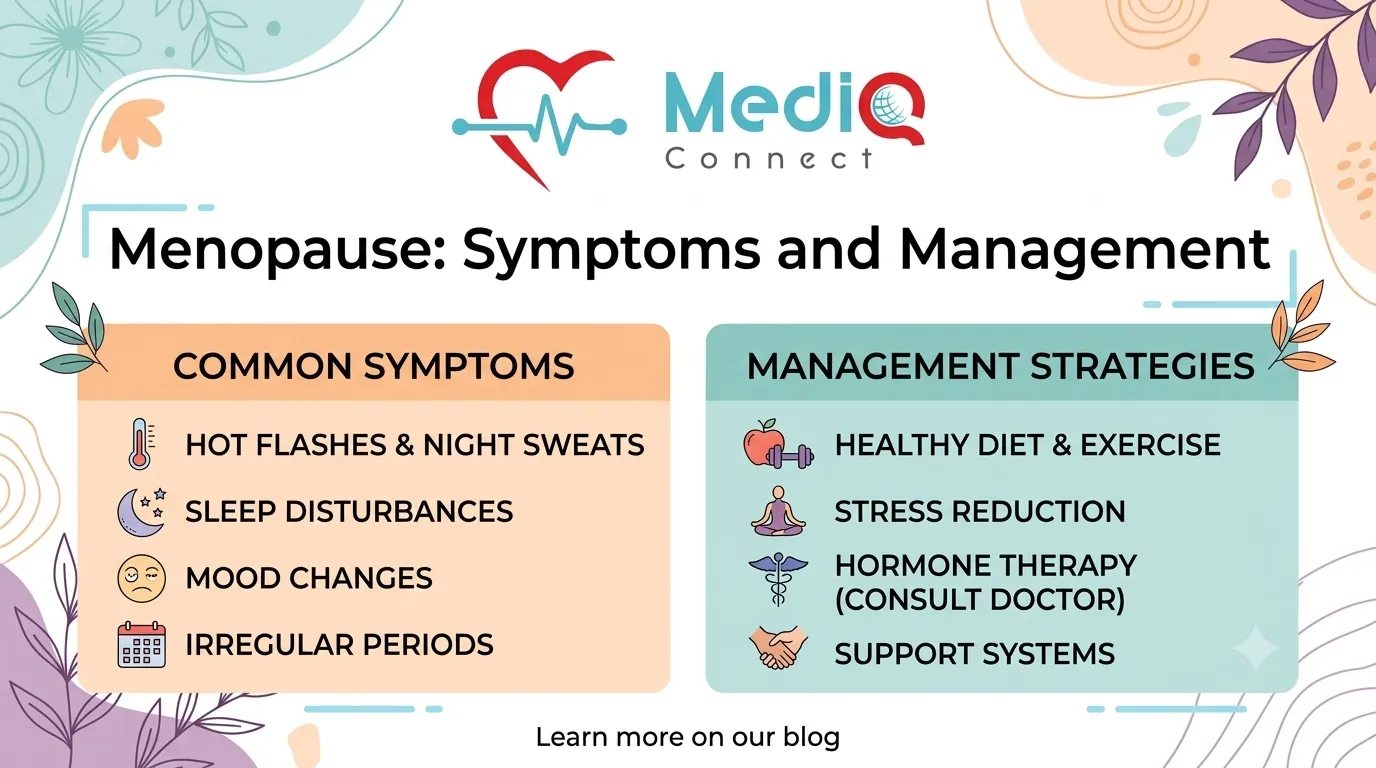



Menopause Symptoms and Management: What Every Woman Should Know
Somewhere in her mid-to-late 40s, most women start noticing changes that don't quite have an obvious explanation - periods that arrive early or late, nights that end in a soaked t-shirt, a temper that feels shorter than usual. These aren't random. They're the earliest signals of a transition every woman eventually goes through, and understanding it early makes an enormous difference in how manageable it feels.
This guide covers everything genuinely useful to know about menopause symptoms and management - what's happening in your body, which symptoms are common versus worth flagging to a doctor, and the full range of treatment options, from hormone therapy to simple lifestyle changes that actually have evidence behind them. Bookmark it, share it with a friend going through the same thing, and refer back to it whenever a new symptom shows up and you're not sure what it means.
What Is Menopause, Exactly? Perimenopause vs Menopause vs Postmenopause
These three terms get used loosely, but they refer to distinct phases, and knowing which one you're in shapes how you approach treatment.
Perimenopause
The transitional years leading up to menopause, typically starting in a woman's 40s and lasting several years. Hormone levels - particularly estrogen - fluctuate unpredictably during this phase, which is often when symptoms are most noticeable and erratic.
Menopause
Technically a single point in time: the day marking 12 consecutive months without a menstrual period. The average age in most populations is around 51, though it varies meaningfully by individual and ethnicity.
Postmenopause
Everything after that 12-month mark. Some symptoms, particularly hot flashes, can continue for years into postmenopause - recent research shows they can persist for up to a decade or more for some women, which surprises many people expecting symptoms to end abruptly at menopause itself.
Understanding this timeline matters because menopause symptoms and management genuinely differs by stage - what helps during the hormonal chaos of perimenopause isn't always the same as what's needed for postmenopausal bone and heart health.
The Most Common Menopause Symptoms
Every woman's experience is different, but research consistently points to a core set of symptoms that affect the majority of women to some degree.
- Hot flashes and night sweats (vasomotor symptoms) - affecting up to 80% of women
- Irregular periods, often the earliest noticeable sign during perimenopause
- Vaginal dryness and discomfort during intercourse
- Mood changes - irritability, anxiety, and increased risk of depression
- Sleep disturbances, often linked to night sweats but not always
- Brain fog - difficulty concentrating or word-finding
- Joint aches and muscle pain
- Weight gain, particularly around the abdomen
- Changes in libido
- Thinning hair and drier skin
Not every woman experiences all of these, and severity varies enormously - some sail through with minimal disruption, while others find symptoms genuinely affect work and relationships in significant, disruptive ways. Both experiences are completely normal.
Hot Flashes and Night Sweats - Why They Happen and What Helps
Hot flashes are the most recognisable menopause symptom, described as a sudden, intense wave of heat spreading through the upper body, face, and neck, sometimes with visible flushing and heavy sweating.
They're caused by estrogen's effect on the hypothalamus, the brain region that regulates body temperature. As estrogen drops, the body's internal thermostat becomes more sensitive to small temperature changes, triggering an exaggerated cooling response - hence the sudden heat and sweating.
What Helps
- Dressing in layers that can be easily removed
- Keeping a portable fan or cool water nearby
- Identifying and limiting personal triggers - spicy food, caffeine, and alcohol are common ones
- Hormone therapy, the most effective treatment for frequent or severe hot flashes
- Non-hormonal medications such as certain antidepressants (SSRIs/SNRIs) or gabapentin, for women who can't or prefer not to use hormones
If hot flashes are disrupting your sleep or daily functioning, that's a legitimate reason to discuss treatment with a doctor rather than simply enduring them - effective options exist and don't need to be a last resort.
Mood Changes, Anxiety, and Brain Fog
The emotional symptoms of menopause are often underestimated, both by women experiencing them and by the people around them. Fluctuating estrogen directly affects neurotransmitters like serotonin, which genuinely explains why mood can feel less stable during this transition - it isn't "just stress."
Brain fog - trouble concentrating, misplacing words, feeling mentally slower than usual - is a real, well-documented symptom, not a sign of early cognitive decline for most women. It tends to improve as hormone levels stabilise in postmenopause.
If low mood persists, feels severe, or comes with thoughts of hopelessness, that's worth addressing directly with a healthcare provider - therapy, medication, or a combination can help meaningfully, and it's not something to just push through alone.
Vaginal and Urinary Changes (Genitourinary Syndrome of Menopause)
Declining estrogen thins and dries vaginal tissue, a cluster of symptoms doctors now group under "genitourinary syndrome of menopause" (GSM). This can include vaginal dryness, discomfort during intercourse, and increased urinary urgency or frequency.
- Vaginal moisturisers (used regularly) and lubricants (used during intercourse) help many women
- Low-dose vaginal estrogen - cream, tablet, or ring - treats the tissue directly with minimal systemic absorption
- Ospemifene, a non-hormonal oral option, is FDA-approved specifically for painful intercourse related to menopause
- Pelvic floor physiotherapy can help with both comfort and urinary symptoms
These symptoms are common but rarely discussed openly - many women live with them for years assuming nothing can be done, when in fact effective, low-risk treatments are widely available and often work well.
Sleep Problems During Menopause
Poor sleep during menopause often has more than one cause layered together - night sweats interrupting sleep directly, plus hormonal effects on sleep architecture itself, independent of temperature.
- Keep the bedroom cool and use breathable, moisture-wicking sleepwear and bedding
- Maintain a consistent sleep schedule, even on weekends
- Limit alcohol and caffeine, particularly in the afternoon and evening
- Address hot flashes directly, since treating the trigger often resolves the sleep disruption alongside it
- Consider cognitive behavioural therapy for insomnia (CBT-I), which has strong evidence for menopause-related sleep issues specifically
Chronic poor sleep compounds nearly every other symptom on this list - mood, brain fog, and weight all tend to improve somewhat once sleep genuinely improves, making this a high-value area to address early.
Weight Gain and Metabolic Changes
Weight gain during menopause is common and frustrating, but it isn't inevitable, and it isn't purely about willpower - declining estrogen shifts fat storage toward the abdomen and slightly lowers metabolic rate.
- Strength training becomes especially valuable during this stage, helping preserve muscle mass that naturally declines with age
- Protein intake often needs to increase slightly to support muscle maintenance
- Portion awareness matters more than strict dieting, since metabolic needs genuinely shift
- Consistent movement throughout the day - not just structured workouts - meaningfully supports metabolic health
Expecting the exact same eating and exercise pattern that worked in your 30s to produce identical results in your 50s sets up unnecessary frustration - adjusting expectations alongside habits tends to work better than fighting the change entirely.
Bone Health and Osteoporosis Risk
Estrogen plays a protective role in bone density, and its decline accelerates bone loss - women can lose up to 20% of bone density in the five to seven years following menopause, raising long-term fracture risk.
- Calcium intake (dietary or supplemented) - around 1,200 mg daily is commonly recommended for postmenopausal women
- Vitamin D, essential for calcium absorption, either from sunlight, diet, or supplements
- Weight-bearing exercise - walking, resistance training - directly stimulates bone maintenance
- A bone density scan (DEXA), often recommended starting around age 65, or earlier with risk factors
Bone loss has no early symptoms, which is exactly why proactive screening and prevention matter more than waiting for a problem to become noticeable - by the time a fracture happens, significant bone density has often already been lost.
Hormone Replacement Therapy - Benefits, Risks, and Who It's For
Hormone therapy (HRT) remains the most effective treatment for hot flashes and vaginal symptoms, but it's not automatically right for everyone, and the conversation around it has evolved significantly since early 2000s safety concerns.
Benefits
- Highly effective for hot flashes, night sweats, and vaginal symptoms
- Helps protect bone density
- May improve mood and sleep quality for some women
Risks and Considerations
- Small increased risk of blood clots and, with certain formulations, breast cancer with long-term use
- Generally considered safest when started within 10 years of menopause and before age 60
- Not recommended for women with a history of certain cancers, blood clots, or specific cardiovascular conditions
Current guidance from major medical bodies emphasises that for most healthy women under 60 with bothersome symptoms, the benefits of HRT typically outweigh the risks - but this is a genuinely individual decision that needs a proper conversation with your doctor about your personal health history, not a blanket answer.
Non-Hormonal Treatment Options
For women who can't take hormone therapy, or simply prefer not to, several evidence-backed alternatives exist.
- SSRIs/SNRIs (certain antidepressants) - effective for hot flashes even in women without depression, at lower doses than typically used for mood
- Gabapentin - originally an anti-seizure medication, shown to reduce hot flash frequency and severity
- Newer non-hormonal medications like fezolinetant, specifically approved for vasomotor symptoms
- Cognitive behavioural therapy - evidence-backed for both hot flashes and associated sleep/mood symptoms
- Clinical hypnosis - has shown benefit for hot flash frequency in some studies
Herbal remedies like black cohosh and soy isoflavones are popular, but evidence for their effectiveness remains limited and inconsistent - discuss any supplement with your doctor before starting, particularly if you're on other medications.
Diet and Lifestyle Strategies That Actually Help
Beyond medication, day-to-day habits genuinely influence how manageable menopause symptoms feel - this isn't just generic wellness advice, several of these have real evidence behind them.
- Calcium- and vitamin D-rich foods for bone health - dairy, leafy greens, fortified foods
- Omega-3 fatty acids, which some research links to modest improvement in hot flashes and night sweats
- Regular physical activity - supports mood, sleep, weight, and bone health simultaneously
- Limiting alcohol, which can worsen hot flashes and disrupt sleep
- Stress-reduction practices - yoga, meditation, or simply consistent downtime
- Staying socially connected - isolation tends to worsen mood symptoms during this transition
None of these replace medical treatment when symptoms are severe, but as part of a broader approach to menopause symptoms and management, lifestyle changes genuinely move the needle for most women.
When to See a Doctor About Menopause Symptoms
Menopause itself doesn't require treatment - plenty of women navigate it with minimal intervention. But certain situations are worth a proper conversation with a doctor rather than waiting it out.
- Symptoms are significantly affecting daily life, work, sleep, or relationships
- You're experiencing menopause symptoms before age 45 (early menopause)
- Bleeding occurs after you've already gone 12 months without a period - this always warrants evaluation
- You're experiencing symptoms not clearly explained by menopause, like unexplained weight loss
- You want to discuss whether hormone therapy or another treatment is appropriate for you
There's no need to wait until symptoms feel unbearable - an earlier conversation often means a smoother, better-managed transition overall.
Sexual Health and Intimacy During Menopause
Changes in libido, comfort, and sexual response are common during menopause, but they're rarely as openly discussed as hot flashes - which often leaves women feeling like they're the only one navigating this.
- Vaginal dryness and thinning tissue can make intercourse uncomfortable or painful without treatment
- Libido changes stem from a mix of hormonal shifts, sleep deprivation, mood changes, and relationship factors, not any single cause
- Testosterone therapy is sometimes considered for low libido that significantly affects quality of life, though evidence for broader benefits beyond sexual desire remains limited
- Open communication with a partner about what's changed tends to ease a lot of the frustration on both sides
If sexual changes are affecting your relationship or wellbeing, this is a completely reasonable topic to raise directly with your doctor - most have heard it many times before and can offer practical solutions rather than vague reassurance.
Menopause and Heart Health
Cardiovascular risk rises notably after menopause, partly because estrogen offers some protective effect on blood vessels and cholesterol levels that diminishes once hormone levels drop.
- Blood pressure and cholesterol should be monitored more closely starting in the perimenopausal years
- Regular physical activity supports heart health alongside its other menopause-related benefits
- Family history of heart disease becomes an increasingly relevant conversation to have with your doctor at this stage
- Quitting smoking, if applicable, has an outsized benefit on cardiovascular risk during and after this transition
Many women don't realise that heart disease risk changes this significantly around menopause - bringing it up proactively at your next check-up is worth doing even without specific symptoms.
Skin and Hair Changes
Declining estrogen affects collagen production and skin hydration, which is why skin often feels drier and less elastic during and after the menopausal transition. Hair can also thin, and some women notice increased facial hair due to shifting hormone ratios.
- A daily moisturiser helps address dryness; avoid harsh cleansers that strip natural oils further
- Sun protection becomes even more important as skin's natural resilience decreases
- Gentle hair care and, in some cases, minoxidil or other treatments can help with thinning - discuss options with a dermatologist if this is a significant concern
These changes are cosmetic rather than medically concerning for most women, but they're a legitimate part of the transition worth acknowledging rather than dismissing as unimportant.
Talking to Family and Employers About Menopause
Menopause symptoms can genuinely affect work performance and family dynamics, and studies show a significant number of women consider leaving their jobs during this transition due to unmanaged symptoms.
- Simple workplace adjustments - access to a fan, flexible scheduling around bad symptom days - can make a real difference
- Being open with close family members about what you're experiencing often reduces friction that comes from misunderstood mood changes
- Some workplaces now have menopause policies or support resources - worth checking if yours does
There's often unnecessary silence around this topic, both at home and at work, when a straightforward conversation could meaningfully ease the load you're carrying through this transition - and normalising the conversation also makes things easier for the next woman who goes through it after you.
Common Myths About Menopause, Debunked
Myth: Menopause means the end of your sex life
With appropriate treatment for vaginal symptoms and open communication, many women maintain fulfilling intimate relationships well beyond menopause - this isn't an automatic ending.
Myth: Hormone therapy always causes cancer
The relationship between HRT and cancer risk is more nuanced than commonly assumed - risk varies by formulation, duration, and individual health history, and for many women the benefits outweigh this modestly elevated risk. This is a conversation for your doctor, not a blanket rule.
Myth: You just have to tough out menopause symptoms
Effective treatments - hormonal and non-hormonal - exist for nearly every symptom discussed in this guide. Suffering through severe symptoms unnecessarily is unfortunately common, but it isn't required.
Myth: Menopause happens overnight
For most women, menopause is a gradual, multi-year transition rather than a sudden event - perimenopause alone can last anywhere from a few years to over a decade.
Early Menopause and Premature Ovarian Insufficiency
Menopause before age 45 is considered early, and before age 40 is classified as premature ovarian insufficiency (POI) - occurring in roughly 1% of women, sometimes with a clear cause (surgery, chemotherapy, autoimmune conditions) and sometimes without one identified.
Early menopause carries higher long-term risks for bone loss and cardiovascular disease specifically because of the longer duration without estrogen's protective effects, which is why hormone therapy is often more strongly recommended in this group, at least until the typical average age of natural menopause.
If your periods stop or become very irregular well before your mid-40s, this is genuinely worth an evaluation rather than assuming it's simply an early version of a normal transition.
Complementary Approaches: What Has Evidence and What Doesn't
Many women explore complementary approaches alongside or instead of conventional treatment. Here's an honest look at what current evidence actually supports.
- Acupuncture - some studies show modest benefit for hot flashes, though results are mixed across trials
- Yoga and mindfulness - solid evidence for stress, sleep, and mood benefits, less direct evidence for hot flashes specifically
- Black cohosh - popular but inconsistent evidence; generally considered safe short-term for most women
- Soy isoflavones - some benefit shown in certain studies, particularly for women who consume soy as a regular dietary staple rather than as a supplement
- Bioidentical hormones (compounded, non-FDA-regulated versions) - marketed as "natural," but lack the rigorous safety testing of regulated hormone therapy
The honest takeaway: some complementary approaches genuinely help specific symptoms, others are largely placebo, and a few carry real risk from lack of regulation. Discussing any of these with your doctor before starting helps you make an informed choice rather than a hopeful guess.
A Sample Week of Menopause-Friendly Habits
Rather than an overwhelming list of changes, here's what a realistic, sustainable week might look like for someone managing menopause symptoms through lifestyle alongside any medical treatment.
- 3–4 days of 30-minute walks or light cardio, plus 2 days of strength training
- Consistent sleep and wake times, even on weekends
- One or two servings of calcium-rich food daily, plus a vitamin D supplement if sunlight exposure is limited
- Alcohol limited to specific occasions rather than daily, particularly if hot flashes or sleep are affected
- A few minutes of stress-reduction practice most days - even just five minutes of quiet breathing counts
Small, consistent habits like these tend to outperform occasional dramatic overhauls - the goal is a sustainable rhythm, not a short-term fix that's hard to maintain.
Supporting a Partner or Loved One Through Menopause
If someone close to you is going through menopause, a little understanding goes a long way toward making the transition easier for them.
- Take mood changes as a real physiological symptom, not a personal attack or overreaction
- Offer practical support - adjusting room temperature, being flexible around bad symptom days
- Encourage (without pushing) a doctor's visit if symptoms seem to be significantly affecting quality of life
- Educate yourself on what's actually happening physiologically - it tends to build genuine empathy rather than just patience
Many women say that having a supportive partner or family member who takes their symptoms seriously makes a bigger difference to their overall experience than any single treatment.
Surgical Menopause: A Different Starting Point
Menopause caused by surgical removal of the ovaries (oophorectomy) works differently from natural menopause - hormone levels drop abruptly rather than gradually, which often makes symptoms more sudden and intense.
- Symptoms typically begin within days of surgery rather than unfolding over years
- Hormone therapy is more commonly recommended in this group, particularly for younger women, given the abrupt loss of estrogen's protective effects
- Discuss timing and options with your surgeon and gynecologist before the procedure where possible, so a management plan is ready from day one
If surgical menopause is part of your situation, mention this specifically to your doctor - the approach to symptom management often differs meaningfully from natural menopause, and a tailored plan matters more here than in most other cases.
Menopause and Long-Term Health Planning
Menopause is also a natural checkpoint for a broader health review - several screening recommendations shift meaningfully around this life stage regardless of symptom severity.
- Mammograms - typically recommended annually or biennially starting around age 40–50, depending on individual risk factors
- Bone density (DEXA) scans - generally starting around 65, or earlier with risk factors like early menopause or a family history of osteoporosis
- Cardiovascular risk assessment - blood pressure, cholesterol, and blood sugar monitoring become more important given rising heart disease risk
- Cervical cancer screening - continues per standard guidelines, generally through age 65 depending on prior results
Use your menopause-related doctor visits as an opportunity to review this broader screening schedule too, rather than treating it as a separate conversation for another day that may never come.
How MediQConnect Helps You Find the Right Doctor
Navigating menopause symptoms and management is far easier with a doctor who takes your symptoms seriously and stays current with evolving treatment guidelines - not every provider does this equally well. MediQConnect makes finding the right one considerably simpler.
- Verified gynecologist and women's health specialist profiles with clear experience and qualifications
- Transparent consultation fees before you book, with no surprises
- Flexible booking - in-clinic visits, home consultations, or video calls for follow-up discussions
- Genuine patient reviews to help you find a doctor whose approach matches what you're looking for
Whether you need an initial evaluation, a second opinion on hormone therapy, or ongoing management, you can compare verified profiles and book an appointment in a few minutes.
For a broader framework on choosing a women's health specialist, see our guide to the best gynecologist in Rajkot, which covers credentials, communication style, and what to check before your first visit.
For follow-up conversations once you're on a treatment plan, our guide to video consultation with a doctor in Rajkot explains when a video visit works well for ongoing care.
You can also browse verified doctors near me in Rajkot across related specialities, including endocrinology, if your symptoms need a broader hormonal workup.
Since menopause can affect metabolic health, our guide to finding a diabetes doctor in Rajkot may also be useful if you're noticing blood sugar changes alongside menopause symptoms.
Frequently Asked Questions
What are the first signs of menopause?
Irregular periods are usually the earliest sign, often accompanied by hot flashes, mood changes, and sleep disturbances as perimenopause progresses. These can begin years before periods stop entirely.
At what age does menopause usually start?
The average age of natural menopause is around 51, though the perimenopausal transition typically begins in the mid-to-late 40s and can start earlier for some women.
Is hormone replacement therapy safe?
For most healthy women under 60 who are within 10 years of menopause onset, current medical guidance suggests the benefits of HRT for bothersome symptoms generally outweigh the risks. It isn't appropriate for everyone, particularly those with certain cancer or blood clot histories - this needs an individual conversation with your doctor.
How long do menopause symptoms last?
Hot flashes, the most studied symptom, last an average of seven to eight years total, though some women experience them for a decade or longer after their final period. Other symptoms vary considerably in duration between individuals.
Can diet really help with menopause symptoms?
Yes, to a meaningful degree - omega-3s, adequate calcium and vitamin D, and limiting alcohol and caffeine are linked to improvement in specific symptoms like hot flashes and bone health, though diet alone typically isn't sufficient for severe symptoms.
Does menopause cause weight gain?
Menopause itself doesn't directly cause weight gain, but hormonal shifts change where fat is stored and slightly lower metabolic rate, making weight gain more common during this life stage without adjustments to diet and activity.
What is the difference between perimenopause and menopause?
Perimenopause is the transitional years leading up to menopause, marked by fluctuating hormones and irregular periods. Menopause itself is the single point marking 12 consecutive months without a period.
Can menopause affect mental health?
Yes - fluctuating estrogen directly affects mood-regulating neurotransmitters, and the risk of anxiety and depression is measurably higher during the menopausal transition. This is a real physiological effect, not simply stress, and is worth discussing with a doctor if it feels significant.
Is it normal to have no periods for months and then bleed again during perimenopause?
Yes, irregular bleeding patterns - including skipped periods followed by a return - are common during perimenopause due to fluctuating hormones. However, any bleeding after you've already reached 12 full months without a period should always be evaluated by a doctor.
Final Thoughts: You Don't Have to Navigate This Alone
If there's one message worth taking from this entire guide on menopause symptoms and management, it's that this transition - while universal - doesn't have to be endured in silence. Every symptom covered here has been studied, and for most of them, genuinely effective options exist.
Give yourself permission to take symptoms seriously, even the ones that feel minor or embarrassing to bring up. A good doctor has heard it all before, and starting that conversation early tends to make the entire transition considerably smoother than waiting until symptoms become severe.
Conclusion: A Transition to Navigate, Not Endure
Understanding menopause symptoms and management changes the experience from something that happens to you into something you can actively manage. Hot flashes, mood changes, sleep disruption, and the rest of it are common - but common doesn't mean you have to simply tolerate them without support.
Whether that support looks like hormone therapy, lifestyle changes, non-hormonal medication, or simply a doctor who takes your symptoms seriously, effective options exist. When you're ready to talk to someone, MediQConnect makes it simple to find a verified women's health specialist and book a consultation that fits your schedule.
Every woman's path through this transition looks a little different, and that's exactly why a personalised conversation with a qualified doctor matters more than any single generic recommendation - including the ones in this guide.
Ready to talk to a specialist about your symptoms? view doctors across specialities on MediQConnect and book a consultation today.
Have Questions About This Article?
Reach out with your inquiry and our team will get in touch with you shortly.